
In a unanimous Senate floor vote on Tuesday, Lousiana became the eighth state in the nation, and the first in the South, to enact benefit corporation legislation. The new law, which goes into effect August 15th, has the potential to attract millions of dollars in revenue to the state, which has struggled to recover since Hurricane Katrina.
You're probably thinking, "Wait, I thought corporations were part of the social and economic problem. Why would we want more of them?"
Good question. The difference between the corporations Louisiana approved with the new law and the ones that exist now is all packed into that little word "benefit."
This year, we’ve seen Mutual Aid in Motion.
From scaling sharing hubs to Mutual Aid 101 trainings, we’re helping communities build the tools they need.
Every dollar fuels lasting resilience – proving that when we move together, we all move forward.

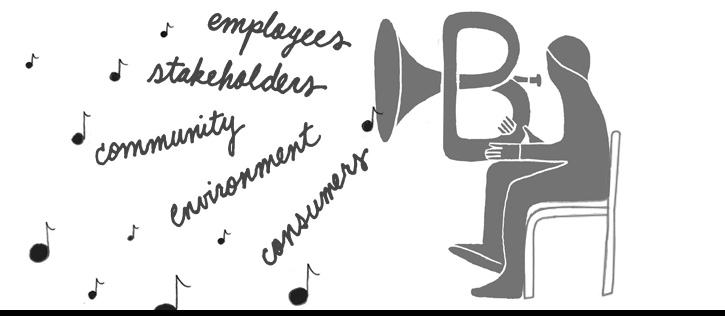
The benefit corporation, or B corp, model was developed by B Lab, a Philadelphia based non-profit, that wanted to find a way to use the power of business to solve social and environmental problems, instead of making them worse. As Shareable's Malcom Harris wrote earlier this year, B corps are "a new class of US corporations, dedicated to social as well as financial good."
- Have a corporate purpose to create a material positive impact on society and the environment;
- Are required to consider the impact of their decisions not only on shareholders but also on workers, community, and the environment;
- Are required to make available to the public an annual benefit report that assesses their overall social and environmental performance against a third party standard.
Unlike other corporations, which exist only to generate profit for their shareholders, a B Corp exists to fulfill its socially or environmentally beneficial mission, and is allowed to put those goals ahead of profit. As such, the B Corp has the legal right to make decisions that might be "bad" for shareholders, but are good in other ways.
The New Orleans Business Alliance uncovered the benefit corporation concept and realized it could be a great tool to help the city’s budding social entrepreneurs incorporate and take on more shareholders without risking pressure to compromise their social and environmental missions. The Business Alliance worked with B Lab to educate the legislature as the bill moved through the House, and GNO Inc. assisted in the passage through the Senate.
“When we looked around and saw that a large proportion of entrepreneurs in the city had built social and environmental goals into their business model, we thought bringing a legal institution to Louisiana that would allow them to scale, be profitable and stay on mission would be a great message that we want them to make this their home for a long time to come. We also felt it would be a message to socially minded investors that New Orleans is the right place for them to put their money,” said Rodrick Miller, CEO of the New Orleans Business Alliance. “We’re excited to see the social enterprise movement taking off in New Orleans.”
As you might imagine, many collaborative consumption companies fit nicely into the B Corp framework. Entities like Couchsurfing, The Hub coworking space in Philadelpha, Solar Mosaic, and Etsy are all B corporations, allowing them to pursue goals that advance their desire to build community, share resources, and encourage entrepreneurship. So far, the United States boasts 533 certified B corporations across 60 industries. Combined, these responsible companies represent $3.11 billion in annual revenue and $2 million in annual savings.
"I am excited that the Governor has signed the B Corp Bill. Its passage has the potential to attract millions of dollars from impact investors around the nation and the globe,” said Speaker Pro Tempore Walt Leger. “More and more we are building the Louisiana that we deserve. Through business friendly initiatives that have attracted and continue to attract social entrepreneurs to our State we are laying the groundwork for the economy of the future. These start-ups are already having a significant impact on our economy and the growth will almost certainly continue with the enactment of this legislation."
And Louisiana's not alone. California, Hawaii, Maryland, New Jersey, New York, Vermont, and Virginia have also pass laws permitting benefit corporations to operate legally within their borders. Seven more, including Colorado, Illinois, and Washington D.C. have similar laws working their way through the state legislature.
Does your company have a socially or environmentally responsible mission? Do you want access to increased funding from investors without compromising that mission? Becoming a B corp might be right for you. Find out first steps in becoming a B Corp as well as what it takes to become Certified by B Lab.
