
Last week, I wrote about the importance of concrete physical parts of the intellectual commons, like food, water, and internet access. In this post, I look at one group that has dedicated itself to building an often-overlooked part of that foundation.
When we think of human rights, we usually think of life staples (food, water, shelter) and freedom from oppression (speech, worship, association), but as I argued last week, that's just not good enough to allow everyone to take part in a global conversation. Ahumanright works to provide internet access to the five billion people without it because they believe the ability to get online is just that: a human right. In their efforts to secure a free internet connection for the world's dispossessed, the group has come up with an idea that sounds both logical and completely crazy: buy a satellite.
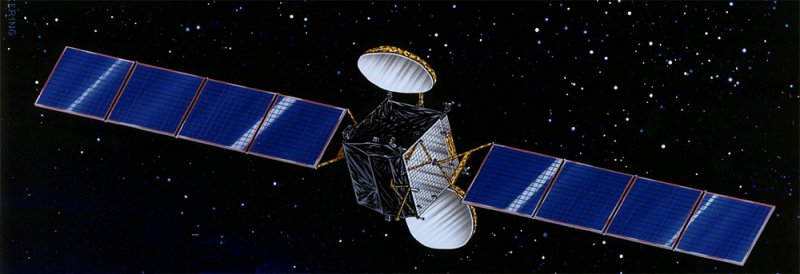
"Buy This Satellite" is Ahumanright's plan and it goes like this: There's a satellite called the TerreStar-1, launched in 2009, that can provide internet to an area the size of the U.S. and Canada combined, and the TerreStar's owner filed for chapter-11 bankruptcy in October. When the satellite hits the auction block, the organization hopes to have raised $150,000 for a (hopefully) successful bid on the bargain TerreStar. Once they have the Satellite in hand, Ahumanright plans to develop a cheap open-source modem and find a orbital position and frequency spectrum in the global south where the access could do the most good. Although the organization believes in free internet for all, as they put it: "there are some realities to face: like paying the rent." The plan is to offer a slower service for free to everyone, while selling the high-speed bandwidth to telecom companies for re-sale, hoping to create incentives for local providers in areas that lack widespread connectivity.

I see the Buy This Satellite plan as an attempt at commoning internet infrastructure. As it is now, only the privileged (on a global scale) even have access to the web, which restricts the kind of intellectual commons we find online. If the web is supposed to eliminate distances both physical and metaphoric, then it must be available at no cost. For the internet to realize its potential as a idea commons, access must be abundant rather than scarce. The only way to accomplish this is to do what Ahumanright ideally proposes: making internet access as free as air or water by building (or buying, in this case) a common physical infrastructure.
Watch their charming pitch video below:
You can find out more about or donate to Buy This Satellite at their website here, 'like' them on Facebook here, and follow the project on Twitter here
