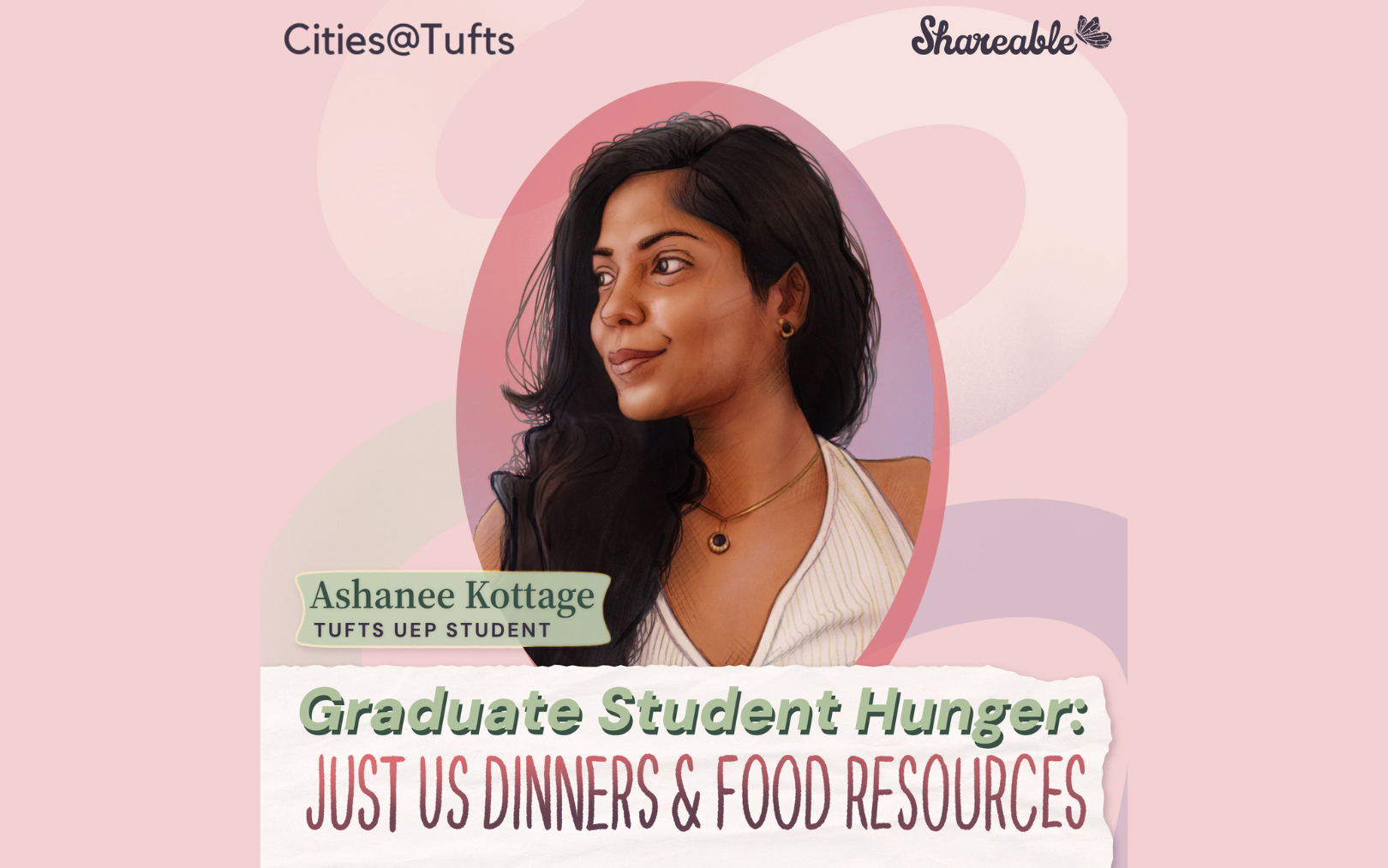
The Just Us Graduate Student Dinners emerged from a recognition of the quiet crisis of food insecurity and isolation that many graduate students—especially Global Majority, low-income, first-generation, and international students—experience.
Academia often disembodies students, extracting them from their cultural food traditions and support networks while offering little institutional concern for whether they are nourished in mind and body.
Just Us was conceived with a dual goal: to surface mutual aid networks that already exist among students while also advocating for institutional change to better support graduate student food security. Through shared meals and facilitated conversations, participants will unearth stories of food traditions, articulate their needs, and organize for concrete changes—whether through meal plans, stipends, or alternative food access programs.
This year, we’ve seen Mutual Aid in Motion.
From scaling sharing hubs to Mutual Aid 101 trainings, we’re helping communities build the tools they need.
Every dollar fuels lasting resilience – proving that when we move together, we all move forward.

By partnering with campus affinity centers and guest facilitators who offer their own food stories as an invitation to dialogue, Just Us seeks to be more than just a meal—it is a movement toward re-rooting students in a sense of belonging, collective care, and food justice advocacy within the university.

About the speaker
Ashanee Kottage is a theater maker, poet, and scholar from Colombo, Sri Lanka, and the founder of Kavaya Press—an artist collective and sustainable publishing home for writers of the Global Majority responding to their environments.
Her debut poetry collection Sand & Sweat traces a coming-of-age across continents, while her academic scholarship explores the journey of coming-of-place. With a degree from Georgetown’s School of Foreign Service and a Master’s in progress at Tufts in Sustainability, Ashanee approaches community gatherings and art making as both city-scale advocacy and national diplomacy. She is currently based between Boston and Colombo, working on her first film, Lunu Rekha, a meditation on tourism’s impact on the south coast of Sri Lanka.
Video recording of Graduate student hunger: Just Us dinners and food resources with Ashanee Kottage
Transcript of Graduate student hunger: Just Us dinners and food resources with Ashanee Kottage
0:00:00.2 Julian Agyeman: Welcome to our Cities at Tufts Virtual Colloquium. I’m Professor Julian Agyeman and together with my research assistants Ainsley Judge and Max Sebbar, and our partners Shareable and the Barr Foundation, we organize Cities at Tufts as a cross disciplinary academic initiative which recognizes Tufts University as a leader in urban studies, urban planning and sustainability issues. We’d like to acknowledge that Tufts University’s Medford campus is located on colonized Wampanoag and Massachusetts traditional territory. Today, our final virtual colloquium of 2025, we’re delighted to host our own UEP, MS Student, Ashanee Kottage. Ashanee is a theater maker, poet and scholar from Colombo, Sri Lanka and founder of the Kavaya Press, an artist collective and sustainable publishing home for writers of the global majority responding to their environments. Her debut poetry collection, Sand and Sweat traces the coming of age across continents, while her academic scholarship explores the journey of coming of place. With a degree from Georgetown School of Foreign Service, her Master’s in progress at UEP, Ashanee approaches community gatherings and art making as both city scale advocacy and national diplomacy. She’s currently based between Boston and Colombo working on her first film, Lunu Rekha as a mediation. A meditation on tourism’s impact on the south coast of Sri Lanka.
0:01:30.1 Julian Agyeman: Ashanee’s talk today is Graduate Student Hunger, the Just Us Dinners and Food Resources. Ashanee, a Zoomtastic welcome to Cities at Tufts.
0:01:42.6 Ashanee Kottage: Thank you so much, Julian. And hi everybody. I’m so excited to be presenting to you all today on Graduate Student Hunger and the Just Us Dinners and Food Resources. Amongst all the things that Julian mentioned about me, I’m somebody who has had to find home in motion. So to begin, I’ll be talking about education, how it can be a disorienting and disembodying experience. I’ll then talk about food and food insecurity. We’ll talk through some literature and expanding definitions of it and then we’ll get to really the substance of my talk, which is on food systems at Tufts and how our project has been trying to reorient folks. But before all of that, I would like to orient you to my history and my relationship to food. I come to you from a beautiful tropical island named Sri Lanka and on my island food is constantly in motion. We are always thinking about… Sorry my… Oh. And when you visit home, you bring with you the results of a game of guesswork. Curd is good this time of year To fight the heat, let’s take fruit instead of biscuits to manage the blood sugar or rice is really expensive.
0:02:51.9 Ashanee Kottage: These days, so let’s take some of ours. But once you extend your gift, you are offered one in return. Paluda on a hot afternoon or a plain tea in the morning, accompanied by short eats and biscuits. Unless it coincides with mealtime. Then you must stay and eat. We insist. Food is a critical part of conversation or visiting anyone in any place. But when I came to the US at 18 to go to Georgetown University in DC. I felt really disoriented. I had been warned about the freshman 15 and gaining 15 pounds, but instead, my freshman year I lost 15 kilos. For those of you who aren’t bilingual, that’s 33 pounds. The little bottles of Tabasco I carried everywhere and pop tarts from vending machines were no match for what my palate was used to and what my body actually needed. It wasn’t just the absence of familiar spices and foods, it was also the absence of community to commiserate with. I heard classmates going out to restaurants or going home on the weekends, finessing student housing so they could cook in a usable kitchen. But all of that felt out of reach to me. It wasn’t really until my senior year, when friendships had ripened enough to share meals and I found a Sri Lankan grocery store, that eating felt meaningful again.
0:04:06.0 Ashanee Kottage: But by then my body bore the cost of years of inadequate food access and student life exhaustion. And when I moved from DC. To Somerville, this replicated itself. So before, here’s an image of what my map used to look like in Columbia Heights in DC. I lived near Target, a Lidl, a Metro station, multiple restaurants. I was living with friends who were South Asian. We were cooking for each other. But when I had to move to Somerville to go to grad school, I had to pay four times in rent just to move to a place I hadn’t even visited before, $3000 of immigration processing fees and ultimately no one to share food with. I was incredibly disoriented and my map was empty. And this type of disorientation is a part of how places are designed. The word disorient stems from the French disoriente, which means to turn from the East. In A History of Future Cities, this book artfully describes how cities like St. Petersburg or Shanghai, Mumbai and Dubai were built with this deliberate Western aesthetic, presenting a future that feels out replace with that cultural context in the East. This jarring juxtaposition is what makes these cities feel disorienting, and universities can evoke a similar nausea.
0:05:19.8 Ashanee Kottage: There’s these infrastructures that are not embedded into the lived realities of people. And while in these future cities, infrastructures like skyscrapers or domes are transplanted, in universities, students are plucked and picked up from one place and dropped into another. And this is not a coincidence. The history of education is in leading out. Education literally means to bring up or take somebody out from something. And they’re embedded in this idea of following your dreams to leave home, engaging in this idea of upward mobility. And this incredible book that stems from Wendell Berry’s work really asks about how universities can instead prepare students to become more at home in their places, as opposed to in being away from their homes. And so while students are uprooted to come to university, there’s an absence of rerouting. While undergrads are going through similarly drastic changes, their experience is at least lubricated by on campus housing and guaranteed dining and extensive orientation programming. In some of our early research around grad student hunger, one participant noted that their priority is keeping a roof over their head. There’s no point in worrying about food if there’s no fridge to put it in.
0:06:32.1 Ashanee Kottage: And housing in Boston is incredibly expensive and also is embroiled in this policy politics of displacing local residents as well. So housing and food go really hand in hand. And education has a missing link to this. And these universities are built on what used to be tribal lands. As Julian mentioned, we’re in Wampanoag land in Massachusetts territory. There used to be gardens, swamps where food could be grown, where people could be lived in, but now they’re these ivory towers, which is not just an abstract academic construct. They’re materially grounded in land, shaping and disorienting the cities around it. The university lawn is just one example example of this, where there’s this idealized neutral, pastoral, which is essentially a settler ecology. Kyle White and Shelby Meisner talk about this idea of a vicious sedimentation, where these infrastructures are built upon indigenous lands, and they ultimately become something that is so out of place with its reality. In some neighborhoods, these lands are called vacant, and in others, they’re called lawns. And at Tufts, the President’s lawn is a literal and symbolic gate, demarcated by name, tradition, and boundary. And one of the most recent challenges to this spatial order came in the form of pro Palestine student encampments.
0:07:47.7 Ashanee Kottage: On campus nationwide, these encampments attempted to make place out of space, repurposing the lawn as a site of collective resistance. But in response, universities met those acts not with commoning or care or recognition, but with administrative and physical violence. So our bodies are only engaged, not for nourishment or belonging, but for discipline and removal on student campuses. And this is an extension of Paulo Freire’s argument in the Pedagogy of the Oppressed, where he says, our education systems look at student bodies as containers to just receive information. And in general, we are referred to as a broad student body, as opposed to individual bodies. It only matters that you show up to class and you do your assignments, not the circumstances under which you do it, not if you have eaten or if you have slept. So education is rooted in this type of ignorance. Classes are scheduled during mealtimes, and we don’t notice that, we don’t acknowledge it. And so these are really embroiled in this politics of mobility. In Julian’s class, we read Cultivating Food Justice, and there’s a section on this woman, Nassim, who talks about her own politics of mobility and how a lot of that is about ease and who gets to move through spaces with ease, who gets to be at home, who gets to inhabit spaces with comfort.
0:09:09.4 Ashanee Kottage: And we really find it hard to find roots, especially if you’re an international student, if you’re from the global majority, if you’re queer. There’s a really deep struggle around wayfinding. And Nassim, in this text, describes how her name slows her down. And we as students, as grad students, feel like our identities slow us down on college campuses. And who experiences food insecurities particular. It’s not universal. So overall, we are living in this limbo between the first and second university. La Paperson talks about how the first university is a colonial one, an institution built through land theft, extraction, and the machinery of settler colonialism, it accumulates land, bodies, labor, and knowledge. The second university, which arguably is what Tufts is, is a critique of the first. It houses radical scholars, ethnic studies departments, activist students, yet structurally, it remains tethered to this colonial machinery. It analyzes and resists, but it does not fully escape. So the third university is not a separate institution, but it’s a set of insurgent practices that operate within and against the first and second. It is made by cyborgs, these students, workers, teachers, who repurpose institutional technologies towards decolonial ends and kind of hack the university from within.
0:10:33.5 Ashanee Kottage: So hopefully that is what we are trying to do with our project. So if we look at food insecurity, in general, the American population experiences very, very low levels of food security, as you can see in this graph. And student hunger is understudied and under addressed, but based on studies around undergraduate students, students who experience high degrees of food insecurity are racially marginalized US students or international students. Students with disabilities who are more likely to be unable to afford balanced meals. Sexually diverse students who have high rates of food insecurity because they’re likely to have had to leave home or have less access to their home and family lives. Gender diverse students have similar experiences. And what we’ve seen in these studies is that a lot of these students experience low levels of nutrition, low energy, and these ultimately affect their grades as well as their graduation levels. Although data on graduate students remain sparse, the demographic patterns and structural drivers identified in undergrad studies almost certainly extend to us, often with greater intensity. Early evidence confirms this. Food insecurity among grad students is strongly associated with being from a racial or ethnic minority group, receiving financial aid, lacking reliable transportation, facing housing instability or supporting dependents.
0:11:56.0 Ashanee Kottage: Graduate students navigate many of the same conditions as undergrads. High living costs, rising tuition, insufficient financial aid, but also experience additional burdens. Demanding workloads, limited time to cook, visa restrictions that prevent students from earning supplemental income and stipends, or postdoc salaries that fall well below living age. Studies consistently link very low food security among graduate students with significantly higher levels of depression, anxiety and stress alongside lower academic performance. And given that graduate students increasingly resemble this non traditional profile, so older, financially independent or juggling work and caregiving responsibilities, it’s reasonable to conclude that patterns observed in undergrads not only mirror but also underestimate the scale of hunger amongst grad and postdoc students. There was a Harvard study amongst three of the schools at the university and out of 1745 participants, around 20% of grad students and 15% of postdoc trainees experienced food insecurity during the academic year. And they reflect the same demographic patterns around ethnic minorities or international students. And these findings suggest that national and institutional interventions are severely needed to address these complex structural factors. But we also see that a lot of schools rely on SNAP. They assume that because there’s a federal policy around food insecurity, schools themselves don’t have to do much about it.
0:13:29.2 Ashanee Kottage: But some studies show that out of the 3.3 million college students who are potentially eligible for SNAP, at least in 2020, 67% of those students did not receive benefits. SNAP in the ’80s was redesigned to exclude students. There was an explicit intention to keep college students from using the program unless they meet very, very specific requirements, unless they’re part time, they have children, if they’re able bodied adults without dependents they’re subject to these very stringent work requirements that were introduced in the 1996 welfare reform. In 2020, there were exemptions that expanded across during COVID and bills were introduced into Congress to address this insecurity, such as the EATS Act or the Student Food Security Act, but they both have floundered. So what we’ve seen in our own research, as well as on the extensions of this literature, is that food insecurity has such an expansive definition. Students realize that their schedule does not account for meals. Housing and transportation affect their ability to access groceries. There’s a lot of local food illiteracy, so I don’t know how to cook with the vegetables that are available in Massachusetts, or I don’t know how to meet my dietary needs with the spices and the foods available in this region.
0:14:52.7 Ashanee Kottage: Students are often substituting nutrition for affordability. Food insecurity also takes the role of constantly searching, worrying or wondering about food or the opposite, where you completely skip meals and you don’t think about food at all. Students talk about how free food on campus is viewed as a snack and not a nutritious meal. And they often don’t notify family members because they don’t want them to worry, or they lie to their friends that they’ve already eaten. There’s also a lot of literature on how students feel a lot of shame and guilt around food insecurities. They talk about not wanting to seek help from their parents or social services, such as SNAP benefits. Grad students felt that if they were seen at food pantries that the undergrad students or their community might undermine their authority. They also feel a lot of guilt for complaining that they should be grateful just to be here or that their education will be worth all the health problems that they’re experiencing right now. And it’s really clear that food security is more than just ramen, pop tarts or free campus pizza. When I came to grad school, I recognized that I was experiencing food insecurity, that just because I had a couple groceries and a couple items in my fridge that it was insufficient.
0:16:07.7 Ashanee Kottage: That food security is far more expansive than simply having something to eat. As you can see in this definition here, there’s so much detail and scaffolding under what it means to be food secure, for it to be stable, for it to be sustainable culture, cultural food for you to feel safe in your eating environments, for you to be having nutritious meals and eating in community. So this multi dimensional definition is how we’ve approached food security in our project on campus. So that brings us to how we are trying to orient food systems at Tufts. If the city that we live in and the institution is disorienting, what can we do to pivot and make students feel this expansive definition of food security? So we’ve created two things. One are food resource guides, and second are these Just Us Grad Student Dinners. And the name Just Us Grad Student Dinners comes from Jocelyn Jackson’s Just Us Kitchen. It’s a play on the word justice, and she talks a lot about liberation and love with every meal. So we have four goals. The first is to connect students to food resources. Second is to improve wayfinding on campus and the city.
0:17:19.7 Ashanee Kottage: Third is to connect students across academic programs to one another. And finally, to share in healing food experience. So with the support from a diversity fund from Tufts University, as well as Professor Julian’s teaching funds, we have created these incredible dinners. We have nine of them. We’ve done six. Seventh will be tonight. And they’re these weekly dinners that accommodate up to 20 students. They’re facilitated by a grad student, and there’s storytelling and dialogue. They’re held at an affinity center on campus with a catered meal from a local business. We share resources, we share stories, and we also have been building a photographic archive. Because I realized that when I was trying to even build a vocabulary around this project, there’s not a lot of images or stories of especially people of color eating. You can find photos of us at ceremonies or very sensationalized images, but not just everyday day to day images of us nourishing ourselves. So we have an awesome grad student photographer, Daniela Salazar. So a lot of the photos you’ll see in the rest of the presentation are taken by her. So these are the six dinners that we’ve already had. As you can see, we have an incredible diversity of student hosts, as well as topics from remembering and reimagining soul food to how to feed the body and how that relates to freeing yourself.
0:18:42.0 Ashanee Kottage: And I’ll talk through how we’ve met our goals and really unearthed a lot of the depth in each of our missions. So, firstly, we have this Grad Food Guide. It’s a leaflet that has both affirmations and statistics about food insecurity and just an encouragement that you can always reach out. And we link it to this incredible food resource map that me and my team have created. We have within the proximity of Tufts campus, what are the community fridges, what are the food pantries, what are assistance programs you can sign up to? What are the grocery shuttles or the dining hall hours over winter breaks, or different ways that both the campus and the city government, as well as the federal government, can support you. But we’re also building this to add all the resources that have been unearthed through these dinners. Because students are constantly sharing information that is not available on a website that we are trying to consolidate into this map. And we’ve tried to make it interactive to learn about these resources. We have a bingo that we offer at our dinners with small prizes, and most of it is around recommending these resources to a friend who might need it.
0:19:56.5 Ashanee Kottage: In addition to those resources, we’ve also built an infrastructure and an inventory for ourselves. In the spirit of sustainability, we bought plates, cups, napkins, silverware, and yoga mats for this project, and they can be reused by any of the grad students. And we have this inventory. And across the nine dinners, the series will have supported 12 local businesses, employed 15 graduate students, collaborated with nine Campus Affinity Centers, and have fed 200 plus students. We have already fed about 150 students and I’m so grateful to have been able to do that. So our second goal is around wayfinding. And when I was moving to Boston from DC, I had a mentor who did grad school in Boston. And he said to me, unlike in DC where community happens in public, in rec centers and libraries, on the streets, Boston is a more private city. Gatherings happen inside. You have to be invited into homes. And so I was really inspired by this and also inspired by a campus infrastructure that a lot of grad students don’t know about. So unlike most universities, Tufts affinity centers are not office like spaces. They are these literal homes that you see in these photos over here.
0:21:14.4 Ashanee Kottage: So we partnered with them and they’ve been incredible collaborators with us because they have couches, they have kitchenettes, they have tea and coffee and snacks and although grad students are allowed and welcome in them, they’re mostly frequented by undergrad students. So we wanted to really mark these places as safe spaces on campus for grad students to go to. And a big part of this was made possible by grad student workers. They’re the cyborgs of this third university that La Paperson is talking about alongside professors like Julian and Penn who encourage eating in class or sharing foods and encouraging students to get together and address these issues that we’re encountering. So building access was a big part of this process and it was a big learning process. So one example is our dinner at the women’s center also had a yoga component. We wanted women to come together and menstruating students to come together and talk about our cycles, menstrual health, and how we can learn and share about nutrition and exercise that’s particularly good for different parts of your menstrual cycle, how stress affects your hunger cues, and how exercise can help support this.
0:22:29.8 Ashanee Kottage: But hosting this yoga was incredibly difficult. We couldn’t find a space to do it. We had to visit about six potential venues, decipher Tufts labyrinth, the room reservation portals, learn who to call, who to email, which buildings were even accessible. And when a last minute location change became necessary, half the participants got lost. We started nearly 20 minutes late and this really showed us how wayfinding is something that we have to do for each other because our very short, very brief orientation process doesn’t do that, even though we also as students pay a student health and wellness fee that that funds the maintenance of these spaces. But anyway, once we gathered, our awesome facilitator, Kelsey transformed Curtis hall into this incredible light dome with borrowed blocks and maps from friends. We had a really great turnout and her guidance really helped us map our body as in addition to the institution, she talked about Vinyasa breath or this idea of holding difficult poses and then releasing. And she would help us develop a vocabulary by saying things like let’s meet at Vinyasa. And that kept making me giggle because that was a goal of this project in general, to build a shared vocabulary to say let’s meet somewhere.
0:23:47.8 Ashanee Kottage: So this dinner made really clear that wellness and wayfinding is inseparable for one another, especially for folks from particular identities. And once we transitioned to the women’s center started to have dinner, some really incredible stories were shared. Students shared how their cycles had become irregular because they weren’t getting iron dense or nutrient rich meals. They talked about how if they’re STEM students, a lot of biochemical students were at this dinner and how they’re in STEM labs for long hours and how food is prohibited in their labs. Or some students feel shameful or embarrassed to eat during class. Students had a lot of tragic stories about feeling fatigue or dizziness or heightened cramps, especially if they’re on their period, and how they feel like they have to ignore this very real lived reality in their body just because they’re a student. Another way that we practiced wayfinding was through city geography. Our dinner at the Latinx center really revealed how much about the city we don’t know, especially Boston’s diasporic geographies. It was facilitated by a PhD student, Ernan who really grounded the dinner where by asking everybody to say to somebody else, your energy is radiant and it amazes me.
0:25:03.2 Ashanee Kottage: And the room softened immediately, dissolving the self consciousness that many of us carry when we come into these spaces. But he also reminded us that especially in a Latinx space, that people are coming from very different histories or migrations and relationships to the land. But something that was foundational to this dinner is the presence of two students who were born and raised locally, one from Lynn and one from Chelsea. Their knowledge shaped everything. Where to order food from, which restaurants still carry flavors of home, how gentrification has changed ingredients and spice levels, which neighborhoods remain cultural anchors despite displacement pressures. And we really crowdsourced recommendations and contextualized community histories. Their insights weren’t just helpful, they were essential. They really underscored how important it is for universities to recognize local students as cornerstones of the campus community and not just a adjacent. Our meal was also catered by Tuillo, which is a 30 year community institution. It was founded by a Colombian man who has had multiple partners, who he has developed the restaurant with and has a mixed Latin American community working in the restaurant from Guatemala, Honduras, El Salvador. And an important part of every dinner that we host is we take a moment to map how the food has gotten to us, whose hands have touched it, whose hands have grown it.
0:26:24.1 Ashanee Kottage: And it was really awesome to be able to do that for this dinner as well with the restaurant that’s down the street from us. A goal that’s incredibly critical and probably our deepest one is connecting to one another. We don’t have a lot of opportunities to meet one another across programs and disciplines. And our dinner at the LGBT center was probably our most diverse, students from multiple different programs. And we were sprawling and spilling out of across the couches and carpets of this room. We started with writing down something that you wanted to hear and putting it in a bucket. Everybody went around and picked one out and read it, which again, is just good to have everybody soften in a room full of… You begin as strangers and then you leave as friends. And each facilitator brings a different voice to these dinners. Hennessy, who was the facilitator for this, shared her poems drawing from her journey with PCOS. And her words reminded us of the connections between our body and nature, and reminded us how much we can liberate our bodies. And students, in response, shared very vulnerable stories about how their ADHD affects their ability to grocery shop or cook, or how much final seasons really affects their diet. Relearning how to eat after being in very toxic sports environments.
0:27:48.0 Ashanee Kottage: And also some really celebratory stories. Reminiscing on cooking sancocho in a tiny dorm room during undergrad or, you know, students… We had a French Moroccan student who talked about how, if you buy me groceries, I’ll cook you a big, big feast. So we had a lot of invitations and a really funny story of a student who was saying, if I don’t eat with friends, “I’m not gonna eat. And I threatened my friends saying, if you don’t meet me, I’m gonna starve.” So a lot of really just delightful stories that are honest but funny. And we were really able to share across a lot of differences and realize that food is a practice of noticing. It’s noticing each other, affirming each other, and remaining tethered to our cultural histories. Similarly, the dinner at the Interfaith center also allowed us to connect across different identities. This was our most intergenerational gathering. We had some professors and university staff chaplains in presence. And we realized that not much has changed since their time. Julian and Professor Mita also shared about how they used to cook just cabbage and rice. And it was all just about survival. They would adapt different food trends at the time just to survive and stay at pace with their peers.
0:29:03.5 Ashanee Kottage: And these stories revealed a really striking continuity. A lot of themes surfaced here as well. International students feeling guilty because they just feel grateful for being here and don’t want to speak up or be asking for food. We talked a lot about the hyper temporality of grad students. You know, we are here for a short amount of time, so how do you develop even a project like this and keep it going? And we talked about food workers. A lot of the student workers at Tufts Dining hall are students of color, in addition to almost all the full time staff being staff of color. So what does that mean when the only way you are seeing yourself be mirrored in food environments is through food laborers? We also talked about food waste in dining halls and how so much of that could be repurposed and ultimately really shared about how the soul or the mind cannot be nourished if the body is empty. And our final goal was really developing a healing relationship to food. Our very first dinner was at the Africana center and was about remembering and reimagining soul food. Our facilitator, Kendra, who’s an organizer, pie maker and historian of her own lineage, shared the sacred history and entanglement between black food ways and black survival.
0:30:19.0 Ashanee Kottage: She talked about how black Americans built this country’s food systems while being denied land, dignity, and nourishment themselves. She spoke about baking pies during the early pandemic as a joy practice. And then she later learned this was not really spontaneous. It was inherited. She has family members who made pies in Oklahoma almost a century earlier. So her story really reminded us that food is a site where memory hides and resurfaces, where grief and pleasure meet, where survival practices become art. And students responded by sharing their own core food memories. Who taught them how to eat. Who taught them how to cook. Their fond memories. And Kendra ended by sharing healthy substitutes for soul food cooking. She referred to soul food being really nourishing, but not always nutritious. So how can you reconcile those two things? Similarly, our second dinner, which was at the Humanities House, and with our incredible PhD scholar, Devonte Love, who’s also a monk and a martial artist, opened with a water blessing, talking about water as the oldest ancestor that connects all of us to different species. And we practiced this amazing Shaolin ritual of contemplating the stories behind ingredients while eating in silence.
0:31:34.2 Ashanee Kottage: And as we were in these five minutes of intentional silence, passing dishes around, we fell into this beautiful choreography that we rarely witness in ourselves. Somebody pouring water into their neighbor’s cup or sliding a napkin across the table, noticing whose plate still needs broccoli. And people couldn’t help but say thank you, even if we were trying to be silent. So it was a really beautiful practice. And then once conversation opened, we started to talk about the stories behind these ingredients. The avocado tree somebody grew up under. Or broccoli as these little trees getting stuck in your teeth. Sesame seeds that reminded someone of their mother’s kitchen or the first meal they cooked alone. And conversations drifted from kitchens to ancestral migrations, to Buddhist teachings to Dominica. And we really surfaced a lot of these tastes of home. And in those moments, the dinner table became a classroom of cosmology, one where food was no longer just food, but an archive, an altar, and inheritance. So ultimately, we believe that we took an environment that is really disembodying and disorienting. And we re embodied and reoriented our food systems within education. You know, we talked about these disorienting cities and their lawns and quads and gates, and these dinners offered a counter landscape.
0:32:56.7 Ashanee Kottage: Across the semester, the dinners became a commons. As Amy Laura Khan, another Tufts professor reminds us, these commons emerged through repeated loving use and making space into place. So each week we commoned Tufts through the Women’s Center, Interfaith center, these various halls, we took them from institutional rooms and turned them into places of resting and eating and grieving and celebrating. We believe we made a third university. We counted the alienation through relationality and disembodiment by taking Tufts funds and really putting them where the student body wants them to go. We made a gesture towards a future of embodied knowledge, what Jacqueline Shea Murphy calls research instances. So practices that regenerate memory and relation. And these dinners surface what the university obscures. Education is a place that could be for health and homecoming, not just for upward mobility or to seek a better place, a higher place. And finally, Jarvis Givens talks about his project around black colleges and black educations. And he says, I ground this project in the language of fugitivity as opposed to resistance or agency, because this concept in its historical reference holds in place the realities of constraint and black Americans constant straining against said confinement.
0:34:18.3 Ashanee Kottage: And it is careful not to overstate either. Fugitivity is never one or the other. And as Fred Morton aptly notes, and I paraphrase, escape is an activity, it is not an achievement. So it’s critical to note that just because we’ve had these dinners, we have not escaped, we have not achieved an end. We are still in motion of achieving something. And we are in kinship with other folks who are doing this. There’s an example of a really great school called Paul Quinn College in Texas. When this new president came into being in 2007, he shut down the school’s financially struggling football program. And given that Paul Quinn is in Dallas, the heartland of football, this wasn’t a popular move at all. But Sorrel noticed something else about the school’s location. It was in a food desert. Or as Julian would encourage us to admit, it’s a food apartheid. And in the absence of grocery stores, it made it difficult for residents to eat well as well as students to eat well. So he really tried hard to get grocery stores to open a branch in the area. But when they couldn’t, he decided to convert the unused football field into a farm.
0:35:26.0 Ashanee Kottage: So now students work on the farm as a part of the school’s social entrepreneurship program. They sell the crops to local businesses, including the nearby Dallas Cowboy Stadium. So we see how universities are already seeing a need and responding to it, and our project is just one way the Tufts could do the same. So I’m deeply grateful to have worked on this project, which has allowed me to reconnect with my Sri Lankan roots and reflect on a relationship to food that was instilled in me from a very young age. In our culture, food also speaks in the absence of words. Elders leave cut fruit on our desks while we study, or siblings who have just fought quietly share mango slices. But this quiet generosity isn’t limited to the home. It’s a broader ethic of hospitality. Even amongst strangers, it’s common to ask, have you eaten? Are you hungry? It’s a cultivated practice of noticing. The time of day, how long it’s been since a meal, the possibility that somebody near you might also be hungry if you’re hungry, hungry. So hunger isn’t treated as a weakness or a failing, but as a shared rhythm of the day.
0:36:31.2 Ashanee Kottage: Food is a universal need. It is a public concern. Asking someone if they’ve eaten isn’t about whether they look fed or emaciated, It’s about recognizing the shared and cyclical nature of care. Because to grow, harvest, clean, season, cook, and serve is labor. And it is unmistakably a labor of love. And the values I carry from my island made this work possible. And as I reflect on food, I also ask that we pay attention to the land itself. Sri Lanka just experienced the worst natural disaster it has since the 2004 tsunami. Over 350 people have died, and over thousands of people are homeless, have been displaced, and are at risk. And so this ethic of care that we have around food also means that people on the ground are rapidly mobilizing. So here’s a list of verified organizations you can contribute to. I am personally collecting funds for an effort by my friends on the ground for medical aid specifically. And for context, $1 is 308 Sri Lankan rupees. The highest bill is 5000 rupees, which is $16. So even a single dollar can go a long way. So I will pause here for a moment for you to scan or note down my info.
0:37:44.6 Ashanee Kottage: My venmo is just my name, Ashanee. And also as a moment for us to reflect on the lives lost as a result of this disaster, not just in Sri Lanka, but also in Jamaica and islands across the world. So this work that I do is rooted in a lineage. I’m so lucky to be a part of, so many incredible black and brown people around the world doing this work. I also just wanted to put a photo of Julian with his long hair because I came across it, but yeah. So shout out to all these folks whose lineage that I’m in. Colombo Urban Lab is a great organization doing food Systems research in Sri Lanka. Charlyn and Janine Oro archive these black land stewards, Donna Dear and Paulette Green, who steward Harriet Tubman’s Land in Maryland. DJ Kavim takes education about food and nutrition and veganism to black youth through Hip Hop. Justice Cornelius Pugh is a close friend of mine who also writes a lot of science fiction around food and food histories. And so I’m really proud to be in their lineage and so grateful for Professor Julian Agyeman’s support in this work. And he really encouraged me to take my experience and turn it into this expansive project.
0:39:03.8 Ashanee Kottage: So thank you so much for listening and I’m really excited to chat to you. Thank you for any donations you just made and for taking the time to hear our stories, and I’m looking forward to your questions.
0:39:21.3 Julian Agyeman: Ashanee, what can I say? Fantastic presentation, inspirational. And you can see all the hearts coming up here. It was quite remarkable, the work that you… Do you want to just mention the other people around you because you pulled together a team, didn’t you?
0:39:37.5 Ashanee Kottage: Yes. In addition to the grad student interns you can see over here, there’s Michaela, Shannon and Gurdeep are my incredible team. We have a dinner tonight and every dinner takes at minimum four of us to make it happen. So I’m really grateful for my team and everybody who shows up and our amazing photographer, Daniela, who a lot of these photographs are mine.
0:40:02.0 Julian Agyeman: So we’ve got quite a few questions, but I want to open with… I mean, you said some incredible things, but I really like this concept of the infrastructure of care. Can you just say a little bit more about that? Because to me, that seems to be pivotal to this whole project.
0:40:21.6 Ashanee Kottage: Yeah. A lot of the prompts that really begin our discussion is based on what we choose to ignore and what we choose to notice. We had a student who shared how she just thought it was coincidental that the friends around her always seem to have in an extra granola bar or a little bit extra food when we have class during meal times. And then her friends shared with her that, no, I actually think of you when I’m packing my food. I think I remember that you forget to bring food or that you might not have had the time because you live further away. So this infrastructure of care is both literal in the inventory that we’ve built up with plates and yoga mats that all students can borrow and indirectly putting funds into local businesses and into student workers. But it’s also this infrastructure of intentional noticing and being like, if I’m feeling this way, if I struggle to eat during finals, I wonder who else is? And how can we institutionalize that? There’s a class that meets on Thursday nights from 6:00 to 9:00 PM and the professor, Laurie Goldman, encourages her students to all bring food.
0:41:30.2 Ashanee Kottage: And somebody is actually responsible for signing up every week to bring snacks and take the lead on snacks. So that type of intentional noticing, I think, is a part of that infrastructure.
0:41:40.9 Julian Agyeman: Great, thanks. So kind of segue from that. Kelly Everett asks, this is such a vital and wonderful way to bring people together through food and culture and address insecurities. For people in other schools, do you have any recommendations for how they might start something like this? Does it require an Ashanee Kottage to do this?
0:42:02.9 Ashanee Kottage: I don’t think so. And honestly, by the end of this, you know, we have three more dinners left. I intend to put together a handbook, which we’ll be happy to distribute. And we’re doing this with a budget of a little over $4000. Our dinners are catered at a max of about $320 per dinner, and that means we can only serve about 20 students. But we encourage students to bring dessert, bring beverages, and all you need is a cozy space and students who are willing to come and the promise of food. If there’s free food and there’s free culturally relevant food and not just pizza, people will show up. I think we might be unique in that Tufts affinity Centers, as I described, are these cozy houses with couches and kitchenettes. And that might be a part of it, but it could be one of our dinners at International Student Dinner I’m hoping to host at my place, which is close by to campus. So there’s a lot of students who want to volunteer their homes or their kitchens, but just need an environment to do it and an excuse to do it.
0:43:11.9 Julian Agyeman: Great. Question from Michael Green. How did you move from recognizing food insecurity among graduate students to envisioning and building such an impactful initiative that centers community building, public education, and healing?
0:43:28.6 Ashanee Kottage: Well, honestly, this is a big shout out to you, Julian, because I had written about my own food insecurity in a discussion post in our food justice class. And you asked me, you were like, let’s brainstorm. How can we do something about this? Because you must not be alone. And so I really encourage all professors and faculty members to also engage in this act of noticing of their students. Most of our classes are scheduled from like 12:00 to 3:00 or 6:00 to 9:00. These are prime, prime eating times, you know, and how can professors and faculty be relating to their students as people and not as these disembodied containers? And I have a history of community building and I think that’s just in my nature to bring people together. I’m a weaver, so I’m really just grateful for the funds to be able to make that happen.
0:44:18.8 Julian Agyeman: Right. Maybe there’s a job in this at some stage. We have a question from Katrina Wolf in New Zealand. I’m curious about campus composting, using resources to make soil, grow food. Any thoughts on the role of universities in modeling future food systems?
0:44:41.9 Ashanee Kottage: Yeah, and Tufts dining hall is actually one of the more responsible and sustainable ones across US College campuses. There is composting. Our map was modeled off of the Office of Sustainability has a map called Ecomap and they have composting sites that are around campus, located on it. But again, because as grad students, I only have access to a dining hall because it was a part of my scholarship program. But not all grad students have access to dining halls like that. So we don’t even have a lot of information about their practices. There is a repurposing program called Swipe it Forward where undergrads who have extra meal swipes can donate their swipes, basically, and then grad students can sign up to receive them. But those run up really fast. The sign up form is, you know, in the ether. There’s no like one place that it exists. So our goal is to kind of take. There’s some great work happening institutionally and to put it all in our map, for example, as a one stop shop for food security resources. But also I’m a… A lot of my claim for this project even came from we need to repurpose our lawns.
0:45:52.6 Ashanee Kottage: Lawns are a monoculture. They take up so much water. They represent this colonial ecology. So what if lawns could be community gardens? Because I think a big mission universities could take up.
0:46:07.5 Julian Agyeman: Madeline Kelly asks, what was the process for developing the various themes of each dinner?
0:46:14.0 Ashanee Kottage: Yeah, so I identified students who inspired me around campus. I have the really great opportunity to be in multiple different departments. I’m in the urban planning department, but I’ve taken classes in the theater department. And the theater and performance studies department is very, very embodied. So the facilitators were split across mostly these two programs. And I would meet with each of them and ask them to share a food story with me. I had certain prompts about memories or about their personal food struggles. And based on what they share and what they’re thinking about in the future, we would brainstorm the topics. So Kendra, for example, about reimagining soul food, or Hennessy shared with me her experience with PCOS. And so then we talked about the body, or when I met with the interfaith chaplains, they talked about themselves being diasporic. So we thought about how could we include that in the conversation around faith and spirituality. So they were very personal conversations that I would have with each of these facilitators in advance. And we’ve had about, like, three or four meetings leading up to the dinner where we talk about these themes. Then one meeting will decide on catering, then we’ll talk about the agenda.
0:47:29.2 Ashanee Kottage: And we want to keep that process iterative. Just because you said something to me a year ago doesn’t mean that’s the topic we have to talk about when we actually do the dinner.
0:47:38.4 Julian Agyeman: You know, I remember at the dinner that myself and Samita were at the intergenerational dinner, as you called it, which is very nice. Not the old person’s dinner, but thank you, Ashanee. But I remember one thing that came up was we were discussing, you know, this very temporary nature of your being here as graduate students, and the question was, would it be in the university’s interest to institutionalize it? Because I think there’d be a problem there, because the energy that comes out of this was from you and from all of these great networks that you set up. What would you think of if the grad school said, hey, we want to institutionalize this? What would you think? What would your advice be to them?
0:48:30.1 Ashanee Kottage: I think there’s a lot of mediation that happens. You know, we received university funding from the diversity fund, and then that kind of came through you as a responsible intermediary, and then through to us. So I think, firstly, students should be taking the lead in curating and envisioning and organizing, and they should be compensated for it. Me and my team are hired student workers, and we get paid for every hour we put into this project. And that is critical because we’re not just representing a need that’s within the university, but within the city. So we’re in that scaffolded system. But if it was to be institutionalized, I think, you know, student workers should be centered and faculty should be present as mediators and to make sure that it’s not just engulfed and becomes a diversity PR project. Yeah.
0:49:29.3 Julian Agyeman: Yeah. That’s one of the dangers that, you know, when I was doing research for my food trucks book, we found that certain cities were using sort of food trucks and their garish colors as really saying, hey, look how multicultural and friendly we are. It wasn’t about equity or social justice. It was about making the city look good. And I think that there is a danger that universities can, could use this to grandstand what they were doing on issues of equity and inclusion.
0:50:02.5 Ashanee Kottage: Yeah, and I think it’s also a matter of scaling because, you know, as I said, we can only feed 20 people per dinner. But if the university were to take it, and they would have to show us that they’re not just taking it and keeping it at 20 students per dinner, that they are willing to support it financially to make, make it up to, you know, feeding 100 people per week as opposed to 100 people per semester. And I think that’s the only way they could justify even wanting to take it on themselves.
0:50:31.1 Julian Agyeman: Do you think this would work? I mean, imagine, you know, we are a university, dense city or metro area. I could see this expanding out and different universities holding, you know, almost like our culture houses hosted each. You could have this with grad students at different universities. Could you think through that a little bit?
0:50:55.3 Ashanee Kottage: Yeah, we actually… I have a friend from undergrad’s cousin goes to Northeastern, is an undergrad, but has Venezuelan heritage and hosts these weekly adipathas. And so I was like, you are somebody who loves food. You should bring some friends and come to our dinner at the Latinx Center. And what that really showed us is that there’s versions of this happening in different ways already at schools. Even prior to this project, in one of my first classes in the fall solidarity economy movements, we met from 12:00 to 3:00 and everybody would bring any extra food they have to share with the class. So there’s ways it’s already happening and I’m just happy to have archived a template. I think it could be copy pasted very easily and also adapted into whatever campus settings. You know, I don’t know what other campus infrastructures exist, whether they have similar affinity centers. But the dinner at the Interfaith center was for example, not in a house, but was in this like big hall. And one of the great things about a dinner is a dinner can take a big white hall and then turn it into a very homey space.
0:52:03.6 Ashanee Kottage: So even though our project is rooted in these houses, I think it could be an act of transforming more neutral spaces.
0:52:14.1 Julian Agyeman: I think that’s something that really, I take away from this is, you’ve really, through this project, transformed a lot of the ways people think about food as, you know, and we talked about this in class. Food is not just nutrition. Food is nourishment. And, you know, you’ve really gone down the nourishment sort of line. Ashanee, final question, what’s your biggest learning from this? Your biggest takeaway personally?
0:52:45.8 Ashanee Kottage: Being in school has been very cerebral and esoteric and a lot of reading and writing and thinking through issues that I feel a little distant from and haven’t been able to get my hands and nails into. And I feel like this has been incredibly rewarding for me personally, because I feel like I’m doing something. And feeding people, feeding people, housing people, It’s where I want my work to be in general in the future. And I’m just really grateful to have had the opportunity to do that. And it’s work, it’s labor. I feel I go to most dinners really exhausted, but I come out of it feeling so rejuvenated. It’s one of those things that it’s a lot of work organizing, but when you’re there and you get to watch 20 people eat, and for some of them, it’s their first meal of the day, or they’re meeting somebody new for the first time, or they’re sharing recipes, that’s irreplaceable experiences. So it’s really helped me do and practice the work that I’m thinking about and writing about.
0:53:57.4 Julian Agyeman: Well, Ashanee, I am so glad that you’ve brought all of this to our department and really pulled together a team of people, infused them, worked with different departments, different centers. It’s quite an amazing achievement. And can we give a great UEP Cities at Tufts round of applause to the wonderful Ashanee Kottage.
0:54:24.6 Ashanee Kottage: Thank you.
0:54:25.4 Julian Agyeman: This is our last of the semester. We’ll be back with six new speakers in the new year. Happy holidays to everybody and thank you for supporting Cities at Tufts. And thanks again, Ashanee.