Contemporary planning approaches often fall short in addressing the cascading environmental, economic, and social issues planners and their communities face. Planners need comprehensive, forward-thinking approaches that prioritize sustainability, equity, and inclusivity.
Mark Roseland’s new book, Toward Sustainable Communities: Solutions for Citizens and Their Governments, is the definitive guide to the why, the what, and most importantly, the how of creating resilient, healthy, equitable, and prosperous places.
This year, we’ve seen Mutual Aid in Motion.
From scaling sharing hubs to Mutual Aid 101 trainings, we’re helping communities build the tools they need.
Every dollar fuels lasting resilience – proving that when we move together, we all move forward.

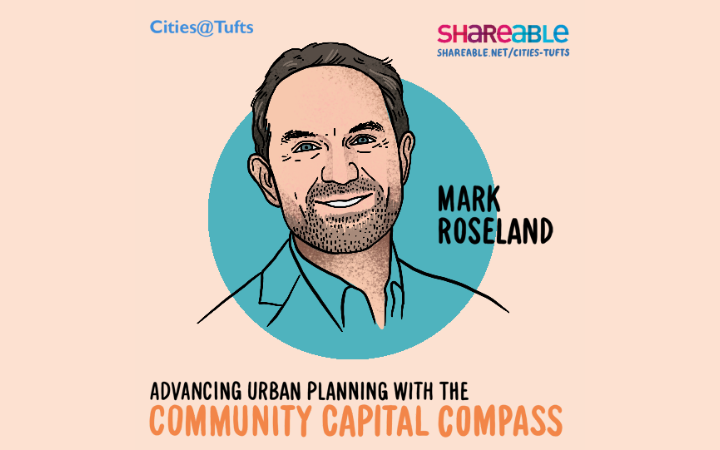
Dr. Roseland will introduce the book’s innovative Community Capital Compass as a powerful tool for maximizing the environmental, economic, and social benefits of complex community and regional decisions. The Compass promises a transformative, equitable, resilient, and sustainable approach to urban development.
About the speaker
Mark Roseland is Professor and past Director of the School of Community Resources and Development, Watts College of Public Service and Community Solutions, at Arizona State University, and Senior Global Futures Scientist with the ASU Global Futures Laboratory. Before coming to ASU, he was at Simon Fraser University (SFU) in Vancouver, Canada, where he was a professor of planning in the School of Resource and Environmental Management and director of the Centre for Sustainable Development. He is a Registered Professional Planner (RPP) and a member of both the American Planning Association and the Canadian Institute of Planners, and he has worked as Chief City Planner for a municipality in the Metro Vancouver area. He has been cited by The Vancouver Sun as “one of Vancouver’s top 50 living public intellectuals,” has received both the SFU Sustainability Network Award for Excellence in Research on Sustainability and the SFU President’s Award on Leadership in Sustainability, and he is a Fellow of the ASU Knowledge Exchange for Resilience.
Dr. Roseland lectures internationally and advises communities, governments, and organizations on sustainable development policy, planning and implementation. He guides cities and organizations on a variety of sustainability-related plans and associated decision-support and implementation tools.
Dr. Roseland advises Boards on their sustainability practice and guides executives on their sustainability thought leadership. He has advised a range of organizations including local governments, state/provincial and federal agencies, foundations, developers, and media organizations. He has produced sustainability plans, performance assessments, policy documents, communications strategies, and tools for monitoring, decision-support and implementation. In addition to his field-defining research, teaching and publications, Dr. Roseland helps produce practical innovations in areas such as mobility, food, housing, energy, climate, planning, and economic development.
Dr. Roseland is also the Founder and Director of Pando | Sustainable Communities, Pando LinkedIn, and the Community Capital Lab.

About the series
Shareable is partnering with Tufts University on this special series hosted by Professor Julian Agyeman (Co-chair of Shareable’s Board) and Cities@Tufts. Initially designed for Tufts students, faculty, and alumni, the colloquium has been opened up to the public with the support of Shareable and Barr Foundation.
Cities@Tufts Lectures explores the impact of urban planning on our communities and the opportunities to design for greater equity and justice.
Register to participate in future Cities@Tufts events here.
Listen to the Cities@Tufts Podcast (or on the app of your choice):


Transcription
0:00:07.7 Mark Roseland: We don’t have a common language, we get false trade-offs, such as environment versus economy or housing versus jobs, and we lose opportunities for synergies. So we need to somehow figure out a way to work across silos and connect the dots so we can see these things together and work in a coordinated, cohesive way and make progress on multiple fronts.
0:00:38.7 Tom Llewellyn: Welcome to another episode of Cities@Tufts Lectures, where we explore the impact of urban planning on our communities and the opportunities designed for greater equity and justice. This season is brought to you by Shareable, and the Department of Urban and Environmental Policy and Planning at Tufts University, with support from the Barr Foundation. In addition to this podcast, the video, transcript, and graphic recordings are available on our website, shareable.net. Just click the link in the show notes. And now, here’s the host of Cities@Tufts, Professor Julian Agyeman.
0:01:12.7 Julian Agyeman: Welcome to our Cities@Tufts virtual colloquium. I’m Professor Julian Agyeman, and together with my research assistants, Deandra Boyle and Muram Bacare, and our partners Shareable and the Barr Foundation. We organize Cities@Tufts as a cross-disciplinary academic initiative which recognizes Tufts University as a leader in urban studies, urban planning, and sustainability issues. We’d like to acknowledge that Tufts University’s Medford campus is located on colonized Wampanoag and Massachusetts traditional territory. We’re delighted to host my friend and colleague, Professor Mark Roseland.
0:01:49.5 Julian Agyeman: Mark is professor and past director of the School of Community Resources and Development at the Watts College of Public Service and Community Solutions at Arizona State University. And he’s a senior global future scientist with the ASU Global Futures Laboratory. Before escaping the wetness of Vancouver to go to ASU, he was a professor of planning in the School of Resources and Environmental Management and the director of the Center for Sustainable Development at Simon Fraser University.
0:02:20.4 Julian Agyeman: He’s a registered professional planner and a member of both the American Planning Association and the Canadian Institute of Planners. He’s worked as a chief planner for a municipality in the Metro Vancouver region and has been cited by the Vancouver Sun as one of Vancouver’s top 50 living public intellectuals. He’s received both the SFU Sustainability Network Award for Excellence in Research on Sustainability and the SFU President’s Award on Leadership in Sustainability. He’s a fellow of the ASU Knowledge Exchange for Resilience. Mark, you’re a member of lots of August organizations and groups.
0:02:58.8 Julian Agyeman: Mark lectures internationally and advises communities and governments and organizations on sustainable development policy, planning and implementation. He guides cities and organizations on a variety of sustainability related plans and associated decision support and implementation tools. If that wasn’t enough, Mark is also the founder and director of Pando Sustainable Communities, Pando LinkedIn and the Community Capital Lab, and I’m sure he’ll explain all of these in detail. His talk today is Advancing Urban Planning with the Community Capital Compass. Mark, a Zoomtastic welcome to Cities@Tufts.
0:03:38.2 Mark Roseland: Thank you, Julian. It’s a pleasure to be here. I’m looking forward to trying to speak with enough time at the end so that we can actually have some discussion. So yes, I am going to talk about, since you are a planning program, I want to talk about urban planning with this Community Capital Compass, which is a… Comes out of a new book, a new version of a book that I’ve written a few times. So let me… Sorry. Let me just firstly acknowledge my co-authors here. They are not going to be on the call with me, but much of what I’m saying today is really from a mind meld with two wonderful co-authors, Margaret Stout, who is a professor of Public Administration at West Virginia University and Maria Spiliotopoulou, who is a Sustainability Manager at Simon Fraser University in Vancouver.
0:04:31.1 Mark Roseland: Just quickly, because most of you are in Boston, and may not know Arizona State University, if you’re thinking it’s something like Massachusetts State University, if there is such a thing, probably going, “What is that?” ASU is a very unusual place. It’s the largest public research institution in the United States, public research university, and it’s got this very interesting charter, very mission driven, and is topped ranked for particularly three things that I care a lot about, innovation, sustainability, and impact. So I just wanted to let you know that, to look it up if you’re interested.
0:05:09.1 Mark Roseland: So what’s the problem that we’re trying to address as planners these day, and basically as citizens? All of us are trying to deal with this. And one way of looking at it is many of you know this very well, and saw the news from last year being not only the hottest year on record, but the hottest year by a long shot. And every indication seems to be that this year will be even warmer. That is part of a bigger concern. The folks at the Stockholm Resilience Institute have been working on this notion of planetary boundaries for many years, and they’ve identified nine of them. And you can see that we are exceeding, overshooting many of them. Where the news a few months ago was that we are now exceeding six out of the nine planetary boundaries that have been identified, which has implications for everything. And what’s also interesting to me is the rate of this change. In 2009, only seven boundaries had been assessed, and three of them had been crossed.
0:06:31.5 Mark Roseland: By 2015 there were still seven boundaries assessed, and four of them have been crossed. Now, last year, nine boundaries assessed and six of them crossed. It’s existential as again, everybody on this call is well aware. So that brings me to my starting point. I’m sure many of you are familiar with Kate Raworth, and she is a… Calls herself a renegade economist. And she articulated the problem I think very nicely with this graphic. She said, “Yes, we have this ecological ceiling, which we can’t surpass, we can’t exceed without putting our entire existence at risk. And that includes land conversion and biodiversity loss and air pollution and climate change and so on. But at the same time, we also have a social foundation where we have a shortfall. So we are not sufficient in the way that we are dealing with food, health, education, income and work, peace and justice, political voice, social equity, gender equality, housing networks, energy and water.”
0:07:48.2 Mark Roseland: So the challenge is that historically the way we’ve dealt with those shortfalls is by increasing material throughput. So we would address these shortages in all of these social concerns that we have by further depleting our natural environment and our natural resources. And the challenge is that somehow we have to address those social shortfalls. We need to provide a social floor, a social foundation for everyone that provides adequate living conditions while not exceeding these ecological limits. So that green circle between the social foundation and the ecological ceiling, which she calls the donut because of its shape, is the safe and just operating space for humanity. So somehow we have to figure out how we do everything in that band. And that’s where I wanna start in terms of talking about how urban planning fits in into that. Now, what does this mean locally, there’ve been lots of responses to this situation.
0:09:09.1 Mark Roseland: They include the sustainable development goal number 11, sustainable cities and communities, ICLEI and organization that Julian and I have been involved with local governments for sustainability, the Eco-Cities movement, attempts to localize the SDGs, the sustainable development goals, whole new discipline of urban sustainability, the journal local environment that Julian edits and I’m on editorial board of the field of Sustainable Community development, sustainable urban design LEAD-ND this is Leadership for Energy and Environmental Design, the Neighborhood and Lead for Cities. Standards, the Eco-Districts Protocol, BREAM, the International Standards Organization, Eco-City Frameworks and Standards, smart growth, smart and sustainable cities, etcetera etcetera etcetera. There’s lots of people who are recognizing that we need to do things differently, we need to do development differently, and are trying to figure out how we do that. So one way to to think about it is where is this photograph of… And we’ll talk about this later, but unfortunately, this could be just about anywhere.
0:10:22.9 Mark Roseland: And, I’m not gonna tell you where it is right now. I’m embarrassed to say it’s a place I used to live, or still do sometimes. But we need to be able to get from cities that look like this, to cities that look like this. Now, this is the same place, just reconceptualized so that it is a sustainable city versus a very unsustainable one. But this is… I’m focusing on the physical dimensions because they’re easy to see, but there are economic and social dimensions to this as well. So the problem again, is that we have all of these good-hearted, intelligent intention people working on a lot of different issues, and doing their best, but they’re not doing it in alignment. So we have people who are particularly focused on economic issues, not surprisingly, but we have other people who are focused on human capital issues.
0:11:27.2 Mark Roseland: I use this framework of community capital, I’ll get to it in a minute. Others who are focused on protecting the environment or affordable housing or racial equity. But all of these things are important, but we tend to do them in silos. And when we do that, we don’t have alignment. We have a tower of situation where everybody is doing different things. We don’t have a common language, we get false trade-offs, such as environment versus economy or housing versus jobs. And we lose opportunities for synergies. So we need to somehow figure out a way to work across silos and connect the dots so we can see these things together and work in a coordinated, cohesive way and make progress on multiple fronts rather than taking oftentimes one step forward and two steps backwards. So our response has been this new book. It’s the fifth edition of Towards Sustainable Communities Solutions for Citizens and Their Governments. And it was just published, it’s a 2024 publication date. And I’m delighted that Julian wrote the forward to it.
0:12:45.6 Mark Roseland: So what you’re seeing on the cover is this image of a compass, and I’m gonna talk some more about what that is. We use this notion of a Community Capital Compass to talk about different forms of community capital, and to use this as a way to transcend silos and connect the dots and to navigate community change and to determine whether we’re actually moving the needle on issues of ecology, equity, and justice. And the Compass is in three dimensions. We call them destinations. The first is environmental, the second is economic, and the third is social. So those are your classic sustainability pillars. But within those we have these eight forms of capital. So environmental sustainability includes natural capital and built capital. Economic sustainability includes organizational, political, and financial capital. And social sustainability includes cultural, human, and relational capital. Relational is replaced with the term social capital which we can get into perhaps later.
0:14:11.7 Mark Roseland: So we take this approach and we embed it into a theory of community change. And that’s why how our approach is a little bit different than many of the others that people who are using community capital frameworks. So let’s start from the outside. We have different actors, which include residents and governments and businesses and anchor institutions and non-profit organizations, all of these different players who are involved in community change. And the things that they actually do include catalyzing action and facilitating collaboration, building community capacity, making investments, and creating and protecting assets. And the process for doing this is through raising awareness and then mobilizing engagement. These are your classic planning steps, conducting assessments and developing a vision and a plan, and implementing the plan and evaluating it. And then going through that again and again. So we’ve got that. And then as you go inside the circle more, we’ve got our three dimensions of environmental, economic and social sustainability. And then these eight forms of capital within that. So this is our theory of change, and that’s where the community capital compass is embedded.
0:15:45.6 Mark Roseland: Because we’re using eight forms of capital, we got very excited about using the notion of a compass which has eight ordinals, I believe the word is. And so the idea here is to be able to use this notion of a compass as a dynamic systems way finding tool. Can we take the notion of the compass and use it in urban planning and community development the way you would if you were orienting and you were out in the wilderness and you were lost in trying to find your way and you had a compass. And we really like it’s a dynamic approach because the landscape is constantly changing. Everything else in the compass is changing all the time. But you can have a true north, you can have a direction that you’re heading in, and you are adjusted as you go. And this is what we’re able to do with the compass.
0:16:44.8 Mark Roseland: So I will explain how we do that in the next few minutes. So how do we operationalize this? How do we take this idea, which is nice, but frankly academic, and how do we make it something that can be used? And then the key to that is that there’s an outer circle beyond the compass itself. And these are the stocks. These are the key stocks for each form of capital. So what do I mean by stocks? Stocks are assets that are necessary to achieve ecological, equitable and just outcomes. And the thing that’s important here about stocks is that stocks can be measured. So when we take a notion like natural capital and then we break it down into stocks like; land, water, air waste, and energy, then those stocks can be further broken down into indicators and metrics, which I’ll get to in a moment.
0:17:46.8 Mark Roseland: And they can be measured and then we can tell if we’re making a difference, whether we’re going forward or backward, whether we’re improving or deteriorating. And also the connections between the different capitals. As you can see, we’ve got natural capital with its stocks in the environmental dimension. Built capital includes buildings and landscapes and transportation or travel ways. Economic capital includes the economic destination of the compass, includes financial capital such as economic strength and development and investment. Political capital, which has the stocks of authority and influence and empowerment and organizational capital, which are your public non-profit business and civic actors.
0:18:36.0 Mark Roseland: And then in the social sphere, we have cultural capital, which includes self-efficacy and heritage and creative arts, it includes, human capital agency potential and wellbeing. That’s going to include things like housing, affordable housing and education and relational capital. Again, it’s sort of supplanted the notion of social capital. And that includes assets such as solidarity, community and collaboration. So the way this works, again, we can look at the Compass and dive into different parts. So again, environmental sustainability, we’re looking at natural capital and built capital. And then as I said, these are the indicators or the stocks that I just went through on the left hand side and on the right hand side, you can see this is actually our cover image, which has all these very subtle little things on the Earth’s surface, but they’re actually very cool, fantastic artists, E Fox, who did this for us.
0:19:41.4 Mark Roseland: But these are indicators, the things that you actually would measure and the metrics. So with built capital, for example, you could measure the number of miles of bicycle lanes, or you could measure the number of landscape design regulations or the number of lead certified green buildings by square footage. And we can go into this in great detail and lots of work gets done in this area. But the point is, by taking each capital and breaking it down into a stock, and then taking the stock to the level of indicators and metrics, you can do these measurements. With the economic sustainability, same idea, the capitals are organizational, political and financial. And you can see these stocks on the left for each of these three capitals that I talked about.
0:20:36.7 Mark Roseland: And then you can start to look at, so what would the indicators and metrics be? So we can talk about… For financial capital, we can talk about the percentage of economic leakage. We can talk about the percentage of the population that’s earning a living wage for the area. For political capital, we can talk about public engagement policies or the number of eligible voters that voted and so on, lots and lots of indicators. They’re not gonna be the same in each place, but the idea is the same in each place. And then in our third dimension, social sustainability, again, we have the three capitals here, cultural, human, and relational, and stocks on the left and then on the right. And I know this is probably too small for you to see very well, but for example, under cultural, we can look at the number of arts and culture organizations per 10,000 residents.
0:21:32.2 Mark Roseland: For wellbeing, we can look at obesity rates or food bank use. For relational capital, we can look at home ownership rates or incarceration rates, or the number of sustainability initiatives. So there’s all kinds of things that can be counted and measured. And in deciding which ones to measure is an important process that requires both some technical expertise by people like yourselves, people who are planning graduates, but also community participation. So, how do we advance urban planning with this community capital compass idea? So there’s lots of things that we can do with the compass. And there are all of these relationships that we can study the interconnections and the mutual impacts. And this can lead us to two basic kinds of outcomes. One is contributing to theory and to knowledge.
0:22:31.5 Mark Roseland: With theory building, we can test causal models as, for example, we can look at natural capital as a determinant of human settlement and industrial activity, or we could look at cultural capital as a primary driver of attitudes and life ways. Or we can look at relational capital, as a way to enhance human capital or organizational capital, or political capital or financial capital. All of these things are the kinds of theoretical knowledge building and theory building work that we can do with the Compass. But the other thing that we can do is it has very practical implications. So these steps that we talked about earlier, these practice steps of raising awareness, mobilizing, assessing, visioning, planning, implementing and evaluating. Later in the book, after we’ve devoted a chapter to each form of capital, we talk about how you pull all this stuff together. And we give a detailed explanation of how a community can go through each of these steps.
0:23:42.7 Mark Roseland: And then in our final chapter, we give a composite case study using a hypothetical community called Centerville. Now, Julian’s gonna laugh looking at this picture because he is in it, but Centerville in this case is based on communities that we have worked with. So between myself and my co-authors, we have decades of experience as researchers and practitioners and consultants working with communities on this kind of work. And so there’s a detailed description, the end of the book about this community of Centerville. And Centerville, we decided it would be a place that’s halfway between the state capital and the economic center of the state.
0:24:33.4 Mark Roseland: And it’d be a community of about 200,000, which is classic. And until yesterday, Centerville was purely hypothetical in my mind. But then when I started looking for some images for this slide today, for this presentation, I realized that there’s actually lots of Centervilles, just too bad. It’s like the Acme of town names. But there are Centervilles all over the United States. There’s several of them in different states. And so I was able to actually draw some images from different Centervilles. But this is how we describe how the compass worked in Centerville. It started off with people in courses. And then, so Julian here is representing a local academic from a nearby university, or one who comes into guest lecture who starts using the language of community capital.
0:25:33.6 Mark Roseland: And so some people in the community start having this language and they discover that they are able to talk across silos. So people who are concerned about renewable energy, people who are concerned about climate change. People who are concerned about, safety and incarceration, recidivism. People who are concerned about affordable housing, people who are concerned about employment, who have been working in basically isolation from each other, are suddenly able to talk to each other in a common language. And so the bookstore and the library start putting displays up of the book, and other books that deal with community capital. And then there are kitchen table meetings and there are book club meetings. And the library has a library forum. And through all of this, a non-profit organization, different civic organizations and businesses is formed called Sustainable Centreville. Lo and behold, there actually is one in one of these towns is formed and sustainable Centerville is created and it has citizens on the board, but it also has members of council. And council has given its some access to staff time. So it has some secretariat and the sustainable Centerville has meetings and they have meetings with citizens and with council and in council chambers. And this is actually the Centerville City Council that you’re looking at.
0:27:04.6 Mark Roseland: And through all of this, they do this visioning process, they come up with strategies and proposals for how to improve community capital in each form of capital, each of the eight forms of capital. And this feeds into a whole series of functional and strategic plans and ultimately into their comprehensive plan, their guiding document. I wish I had time to recite that section of the book to you ’cause it’s really fun, but I don’t, so I just would encourage you to read that. So what we take away from the Centerville experience and experiences like that is that the key to advancing community planning and urban planning here is going from shared data to shared agenda. And the way we do that is first we need shared data, particularly now when we’re in such a polarized world and everybody has their own information and their own information ecosystem and their own bubble. So you have to start out with data that we could all agree upon is fact is real.
0:28:14.4 Mark Roseland: And then probably the worst thing that came out of the last few years in this country is the idea of alternative facts. We can have alternative theories, but facts should be agreed upon. So we have shared data that can lead us to having a shared analysis of what’s going on in our communities. From that shared analysis, we can develop a shared vision of who we are and who we want to be and where we’re going and how we get there. And then how we get there is the shared agenda. So how do we actually do that? And all of this is really about getting community alignment. This is the key thing, alignment across the community, and also between elected officials, staff, and the wider public. When stakeholders are aligned, they drum to the same beat, and dance to the same music.
0:29:14.9 Mark Roseland: And that’s what we’re aiming for. Community alignment is the way that we transcend silos, connect the dots, harness synergies, and generate multiple co-benefits. And using the Community Capital Compass, and its associated tools, we can make those connections and synergies visible, which advances the prospect of win solutions. So the other thing that we have done with the book that I want to make sure to note here is that the book is a 2024 book. So it’s extremely current right now, but it will stay current in 2025 and 2026 and beyond because we have two digital companion pieces. We have a digital compendium called Pando and Pando.sc for Sustainable Communities is named after the Pando tree, which is this image on the bottom left here. The Pando tree is actually not a single tree. It’s a forest of 147,000 individual trees in the Colorado Plateau in Utah that are all connected to the same root system.
0:30:33.9 Mark Roseland: It’s a remarkable organism. It’s one of the oldest organisms on the planet, probably the heaviest organism on the planet. And in Latin, Pando means eye spread. And that’s what this movement is about. So Pando is where we are putting all of the stuff that all the case studies and the examples and all the new material that is coming to our attention every day long after the book went to the publisher, it’s there on Pando. So if you are a researcher or if you are looking for materials for teaching or using, looking for materials for consulting or other projects, Pando is just a really fantastic resource for you.
0:31:17.6 Mark Roseland: We also have a Pando group on LinkedIn, and this is a community where the readers of the book and the users of the book can communicate not only with us as the authors, but with each other. So we can start to develop a community there. And the last thing I’ll mention is that for those of you who are interested in doing this work, I know you’re in a master’s program. Anybody who’s interested in doing a PhD or doing consulting work, check out the community capital lab that I run. We work with communities, governments, foundations, businesses and civil society on these kinds of approaches to dialogue and decision making, monitoring and assessment. And we work with people across the country and around the world. So get in touch. Thank you very much. I’m very searchable. I can put up a lot of links, but the easiest ones to remember, you can just go to markroseland.com and reach me there, and find links to all the things I’m talking about. And also Pando.sc again, for sustainable communities. You’ll find links to the book and everything else there.
0:32:32.0 Julian Agyeman: Great. Thanks, Mark. That’s a really expansive vision and those of you from my class are in the watch party, really put some more detail than we could go into on when we looked at this in class. Mark, lots of questions. Let me start with Kaiser. We talk a lot about data and and that is the core foundation. What about dreaming the community vision?
0:33:00.9 Mark Roseland: Oh, absolutely. So thanks. It’s a great question. The data is to establish the factual basis. Data does not limit us in terms of what we can do and what we should do. And so for that, we talk about a very participatory process that, again, includes expertise because there are people who have expertise in the data in particular. But the people who really know about communities are the people in those communities. And it raises an interesting question. It’s not really what you asked, but it’s a side note, which is the whole notion of subsidiarity. The idea that decisions should be made as closely as possible to the level where they will be implemented to the people who will be most affected. That’s a kind of a conservative, a small C conservative idea that I’m very fond of, but it’s actually under attack right now by many states.
0:34:02.1 Mark Roseland: And actually, I was just looking at seeing that the state of Massachusetts is suing the city or the town of Milton, Massachusetts on just this very ground. So you have a local example there. But we’re seeing this in Arizona. We’re seeing this in British Columbia. It’s very interesting that we have said that community is the level that where these decisions should be made and certainly where the vision should be coming from. But yet there’s some downsides to communities in terms of NIMBY and resistance to housing density and affordability. And so there’s a very interesting debate going on in many places about what is the role of local governments or communities and which really is where the dreaming comes in versus sort of states saying, “You know what, you guys are just… You can’t do this anymore. We’re going to take it away from you. We’re going to take this authority away from you. “
0:34:54.3 Mark Roseland: Now, personally, I would rather fight city hall any day than have to fight the state legislature, especially in some of the states where this is most fraught. But the dreaming thing is an interesting question. So definitely dream on, but dream on with data, it makes it a better dream.
0:35:17.1 Julian Agyeman: Great. Thanks, Mark. Madhi wants to know if they can have more details about the practice steps. He’s asking, evaluation as part of the Community Capital Compass tool is a requirement. Having said this, though, how the evaluation takes place in such a way where community alignment is still present?
0:35:37.3 Mark Roseland: So that’s the process. And again, the central example goes into quite a lot of detail of how this worked out with, again, you have a community group that’s functioning both as a city advisory committee, but also as an arm’s length independent non-profit. And by doing that in partnership with the local government, with council, you’re able to bypass some of the restrictions of a legislative body that does public hearings and so on, like a city council, but yet also use some of the resources they have like expertise and staff time. So the process that’s described in the book is quite a lot of detail where Sustainable Centerville goes and they ask the city to do certain studies for them. And they say, this is the kind of data we want to have, this is what we want to know, bring it back to us. And then they do their own workshops, they actually create a civic forum which is a way to have an annual report card on how the city is doing with all of these indicators, but do it in a way where it’s like a council workshop, rather than a public hearing, which tends to be too legalistic and bureaucratic and too many people just saying no. Just because it’s… Whatever it is, they don’t like it.
0:37:03.1 Mark Roseland: So it is a way to actually have that kind of engagement. It is really important, Madhi, and I know Madhi, Madhi is coming to us from Tehran, and the context there is obviously very different in terms of local authorities and the state. But still, some of this has got to be universal in terms of however it’s done in different countries, you still have a state, a national state and a local state, and in whatever way and shape and form it’s done, there is some way of having local voice. How that is done is going to differ from place to place, but the principle of making sure that local voice is respected and acknowledged and has a role here is very important.
0:37:45.0 Julian Agyeman: Just continuing on the indicators thing in class, last week we were looking at Santa Monica, which really made the revolutionary step of making sustainability indicators, the actual performance indicators that the city council ruminated on, worked on, reported on, and looked at improving. Are you getting much sense that is spreading? Because it seems to me, you can have a Boston indicators project, fascinating indicators, but they have absolutely nothing to do with Boston City Council, it’s funded by the Boston Foundation, but it’s devoid of any political traction. Whereas it seems in Santa Monica that the community and the city and the stakeholders came up with a series of sustainability indicators which then became performance indicators, so that the community knows that the city is acting on those. Are you seeing any more of that?
0:38:40.0 Mark Roseland: We are actually seeing a lot of that in different ways, and again, all of those different organizations that I talked about at the beginning, I mean, Lead for Cities and all of these different systems, a lot of people are struggling with. They take a lot of work to comply with. Who should I comply with? The business community with ESG, they’re going nuts with this stuff. They’re saying that one group wants this and one group wants that, and we don’t have the resources. It is a similar thing at the city level.
0:39:07.1 Mark Roseland: But I think what’s interesting for this audience and the argument we make in the book is that, all of this stuff is important, and having these indicators is important, but keep your eye on the plan, and particularly on the comprehensive plan. So a lot of these programs, Sustainable Seattle and so on and again over the last few decades, have been, like you’re talking about with Boston, they’ve been independent of what the official plan is. And there are some functional plans, like sustainability plans, that are coming in to bridge the gap, but ultimately, it’s the comprehensive plan, which is often called the general plan, that is the overarching document. And if your sustainability indicators program, your assessment and management program, isn’t pointing in that direction, then you don’t have skin in the game. You’re not going to be able to really make a difference where it counts over the decades.
0:40:07.6 Mark Roseland: And so that comprehensive plan or general plan, that is the umbrella, if you will, or it should be for all of the other plans. Now it isn’t always. There are lots of places where those plans are, they’re written and they’re adopted and they’re ignored for a long time. But what we’re aiming for, the goal that we described in the book, is you want to go for the, ultimately you want to influence your comprehensive plan. Now they don’t get done every year, as they’re often on a five-year review cycle and then a 20-year revision cycle. But they do come up. And when they come up, you have a window there as a community to really make a difference. And so this is where the timing part comes in.
0:40:52.6 Mark Roseland: And so if you have a group like Sustainable Centerville that’s actively working with council, you can also start to do things like run people for council, right? Where do those counselors come from? They come from different sectors of the community who have practiced articulating their voices and organizing their communities. And we need people like the folks on this call to be in those positions. And one of the reasons that we wrote this book is so that planners and practitioners and citizens have a guidebook, a handbook to understand what’s going on in their communities so that they can actually participate, not just at the voting booth every few years, but on an ongoing basis with the decisions that matter.
0:41:37.4 Julian Agyeman: Thanks, Mark. Next question from Kate MacDonald from Hull in the UK. Kate, I don’t know if you know this, but Hull is my home city. Go Hull City Tigers. Revisioning, Kate asks, we’ve been using a large scale participatory visioning process called Town Anywhere. It’s hot off the press, apparently. It’s a similar vision to your processes to enable people to feel the wider system and start collaborating across silos. I don’t know if this is so much of a question as just information, but it’s on YouTube and it’s called Town Anywhere. Thanks, Kate, and enjoy Hull. Do you want to add anything to that, Mark, or Kate, do you want to add anything?
0:42:17.6 Mark Roseland: Get in touch, Kate.
0:42:19.5 Kate Raworth: I’ve just said, I’ve just ordered your book and everything. That we’re doing other stuff around the local plan with the council. A big thing about what we’re doing is building relationships as humans rather than roles to enable the more equitable space to work together alongside rather than be engaged with. Yeah, and I just ordered your book, so I think it will really help us thanks.
0:42:41.4 Julian Agyeman: Thanks, Kate. See, Mark, we get you sales.
0:42:45.7 Mark Roseland: That’s why I had you next to the bookstore in the Sustainable Centre building.
0:42:51.0 Julian Agyeman: Tom B is asking, as more of us globally move to cities and we become increasingly an urbanized species, how important is it to include local food infrastructure to planning processes and concepts such as this? Even going beyond urban Ag and looking at peri-urban and rural elements of metropolitan food sheds.
0:43:10.8 Mark Roseland: Yeah, it’s a great question. It’s a great topic. We’re obviously not going to be able to get into it very much here. But in the book, we focus on urban regions and I deliberately called the book towards sustainable communities rather than cities for exactly this reason. Because rural areas matter, the bio region matters. And so there’s a lot happening in the food area, not only in terms of agricultural land and its relationship to urban boundaries and so on, but also urban agriculture, everything from community gardens to vertical farming. There’s so much really interesting stuff going on and I think there’s tremendous potential there to do some very interesting work. Not only in terms of agriculture, but urban aquaculture, people who are growing not produce, but fish protein.
0:44:02.4 Mark Roseland: There’s a colleague of mine here in the Phoenix area who has figured out a way to grow fish to an edible size using Kiddie Pools, the kind of Kiddie Pools you can buy from Walmart, sticking your backyard for the kids to play in the summer. He’s turned those into what he calls a three-hour farm. So there are just wonderful, exciting things going on. And again, you can find out more about that from Pando.
0:44:30.1 Julian Agyeman: Great. We’ve got a question from Matthew Thompson. Please could you say a little bit more about how you anticipate the base indicator sets evolving and any gatekeeping processes there with Pando? He says, “I was struck by your comment that an indicator of relational capital might include home ownership and brackets would love to understand the rationale for that, whereas tenure mix might be more appropriate indicator of solidarity.”
0:44:57.8 Mark Roseland: Absolutely. So all of those indicators that I gave you are example indicators. The actual choice of indicators should be a participatory question and it should not be left to experts other than I would argue that we need indicators across this range that I’m calling Community Capital. We need to, whether you talk about Community Capital in terms of three forms of capital, or six or seven or eight or nine, or, I’m agnostic on that. Obviously, I like the eight, that’s why we just wrote the book about it. But the point is to not be siloed, to not just be looking at one thing. And so many of us are so siloed and the worst places for being siloed our are governments and universities. That’s what we do is we silo and we’re really good at it to going into great depth on very little and then not being able to communicate across our silos. If anything, to me, silo is the ultimate four letter word. And what we’re trying to do here is break down silos, transcend silos, and be holistic and comprehensive. So the question of what indicators, whether it’s home ownership or tenure mix or so on, absolutely let’s debate that. And in one community it might be different than in another community. That’s fine for now, but at least we’re looking at that and all of these other things and pulling ourselves out of this little sort of hole that we’ve dug our heads into, like ostriches and starting to see a wider connection here.
0:46:27.6 Julian Agyeman: Great. We’re coming up to the last couple of questions. Dr. David Abrams asks, “What was the reason for expanding the five capitals?”
0:46:40.6 Mark Roseland: Hi David. This version of the book, the last few editions had six capitals and I liked six for a couple of reasons, but one of them is because we know from neuroscience that most people, most well-educated people who have had a good breakfast, can only think of six things at once. So if I ask you what you had for breakfast yesterday, your eyes are gonna roll into your head because you just can’t do that, right? Without, all our minds aren’t built for that. So six is the magic number there, which is one of the reasons we’re having so much trouble with the STGs ’cause it’s 17 and people are going, “Oh my god, such a big number.” And I’m gonna digress here, but compared to astrophysics or the human genome project 17 is a rounding error. It’s hello people. It’s not that big a deal. But anyway, with going, having two co-authors this time and bringing in some new material, we thought it was time to bring in organizational and political capital, which were really not pulled out of social capital well enough in the earlier editions. So those are the new editions plus changing social to relational. So it’s just more sophisticated. And because we have eight we can use the compass, and if you had a compass with six directions, it wouldn’t be nearly as good as one with eight directions.
0:47:57.3 Julian Agyeman: Great. Okay. We got one last question from Chad Nelson. Chad, do you wanna say this yourself? ’cause it’s quite a long question, but I’m, I think you can probably distill it down much better than I can. Are you still here, Chad?
0:48:09.1 Chad: Sure, I am. Can you hear me okay? Can you, I hope I can be heard. Okay.
0:48:13.8 Julian Agyeman: I can hear you, Chad.
0:48:15.1 Chad: Oh, great. Nice to see you, Mark. I work on climate resilience and infrastructure, which tends to mean an awful lot to many different people. And I’m in the federal government, sometimes you could say it’s replacing a rusty pipe with a new pipe. Is that climate resilience or is it that the diameter can now accommodate big storms, right? Or was this located in the porous community that needed the investment first before the richest community? All I’m just curious about is in this expansive kind of multi solving approach to indicators. I think this is great work that continues. I still remember the first book in 1992 from the National Roundtable on sustainable communities to have it, I think.
0:48:54.3 Mark Roseland: Great.
0:48:54.7 Chad: How can we kind… I think just so keen that we don’t take a very simple perspective on something. Say this is climate resilience replacing a rusty pipe, but we think about all these other values that we need to bring into this aspect. It may be, some places it might be moving that community back from the seas edge. It might not be replacing, it might be using natural infrastructure. So I just wanted to give a shout out to the need for multi solving and the climate resilience so we don’t get greenwashing in a way of That’s it. But over to you, Mark. Thanks.
0:49:26.9 Mark Roseland: Yeah, good. Thank you, Chad. It’s a good comment. And one of the reasons for that, I still use the term sustainability. I use resilience too, but you scratch resilience. People who really understand it are talking about sustainability, but a lot of people don’t understand it. And so they just hear the word and resilience is you get knocked over and you stand back up again. So it’s disaster management. It’s what you do after a storm. And that assumes that what you had before was okay. Was good. And sustainability is much more normative and says, “Hey, you know, what we have is unsustainable.” And you look at the donut and that’s a really clear example, and you don’t need a disaster. The whole donut is a disaster. Everything on the outside and the inside is a disaster. That’s what we’re trying to change.
0:50:13.0 Mark Roseland: And in order to do that, we want to actually become a sustainable society. And becoming a sustainable society means making improvements in all of those forms of capital. That’s how we do it together so that we’re not just doing it. One thing, yes, we could have theoretically conceptually, you could have a society that was good on one of those things, like, maybe more resilient but terrible and not the others. To me, that’s hardly worth fighting for. Yes, it’s better than nothing, but that’s not what I’m about. I want a sustainable society, a sustainable world. I want my children and their children to live in a world that is not just resilient, but that is better than what we have now. And that is a sustainable world. And that means you can’t have a sustainable planet without sustainable communities. And that’s really what we’re all about here.
0:51:34.9 Julian Agyeman: That’s a great way to end Mark. Mark, thanks so much for this. This has been fantastic.
0:51:41.3 Tom Llewellyn: We hope you enjoyed this week’s presentation. Click the link in the show notes to access the video transcript and graph recording, or to register for free tickets to our upcoming lectures. Cities@Tufts is produced by the Department of Urban and Environmental Policy and planning at Tufts University and shareable with support from the Bar Foundation, shareable donors and listeners like you. Lectures are moderated by Professor Julian Agyeman and organized in partnership with research assistants Deandra Boyle and Muram Bacare. Light Without Dark by Cultivate Beats our theme song. Paige Kelly is our co-producer, audio editor, and communications manager. Additional operations funding and outreach support are provided by Alison Huff, Bobby Jones, and Candice Spivey. Anke Dregnat illustrated the graph recording. And this series is Co-produced and presented by me, Tom Llewellyn. Please hit subscribe, leave a rating or review wherever you get your podcasts and share it with others so this knowledge can reach people outside of our collective bubbles. That’s it for this week’s show. Here’s a final thought.
0:52:43.8 Mark Roseland: Can we take the notion of the compass and use it in urban planning and community development the way you would if you were orienteering and you were out in the wilderness and you were lost and trying to find your way and you had a compass and we really like this. It’s a dynamic approach because the landscape is constantly changing.