
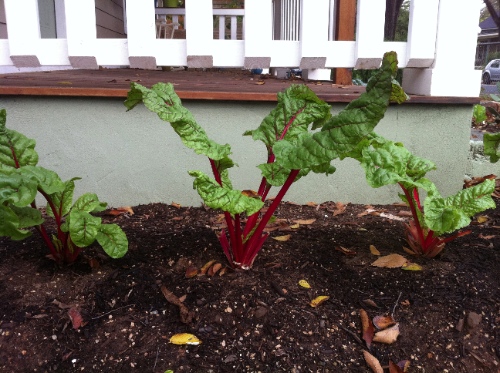
I come from a long line of brown-thumbed plant killers. My mother was only capable of cultivating a suburban lawn and my father was better at disassembling mainframes than lawnmowers. I haven’t fared much better, having offed countless bamboo plants and cacti in novelty pots. Needless to say, I had never shown much interest in growing my own vegetable garden, until my miserly instinct rankled at spending $5 for a head of kale at Whole Foods or the local grocery co-op, to spend so much money on something that came from the ground.
It wasn’t until my wife and I moved from Chicago to Austin, and I quit my day job to go full-time freelance, that the notion of growing our own vegetable garden became plausible. Because of Austin’s lower cost of living, we were able to afford to rent a house rather than an apartment for the first time, with a giant untended yard begging for some kale and broccoli and the like. Regardless, we shared a fundamental problem: neither my wife nor I knew how to keep a plant alive for more than a few weeks, much less an entire garden.

This year, we’ve seen Mutual Aid in Motion.
From scaling sharing hubs to Mutual Aid 101 trainings, we’re helping communities build the tools they need.
Every dollar fuels lasting resilience – proving that when we move together, we all move forward.

Fortunately for us, Austin’s vibrant co-op community presented an option. A local co-op, Resolution Gardens, set up our garden and comes regularly to teach us how to tend a vegetable garden. It’s fantastic. At least half of every meal we make at home is sourced from our garden–multiple kinds of lettuce, kale, swiss chard, broccoli, turnips, beans and more. We’ve cut our grocery bills in half, an enormous benefit since neither of us pulls in a stable office-job paycheck. We have plenty of leftover greens to share with friends. And there is an intense sense of satisfaction that comes from getting away from the maddening glare of the computer screen mid-day to water and weed our vegetable garden.
What strikes me most is how easy maintaining the garden is, after a little much-needed training. Resolution Gardens’ goal is laudable: as they state on their website, they aim to “re-create the local Austin food supply. We see a future where tens of thousands of Austinites have small, medium and large veggie gardens in their yards and all Austin families, individuals, restaurants and grocery stores have access to healthier, more nutritious, locally grown organic food.” Similar education efforts can be found through gardening co-ops across the country–from Portland to Minneapolis, Boise to Winnepeg–teaching renters and homeowners the skills necessary to completely transform how they source their food.
Granted, not everyone can grow their own vegetable garden, due to space or time constraints. But those who can, should. It takes a surprisingly little amount of time to maintain on a daily basis, and the benefits are many: lower grocery bills, food to share with your community, and the sense of satisfaction that comes from getting away from the laptop and the iPhone and getting your hands dirty.
