
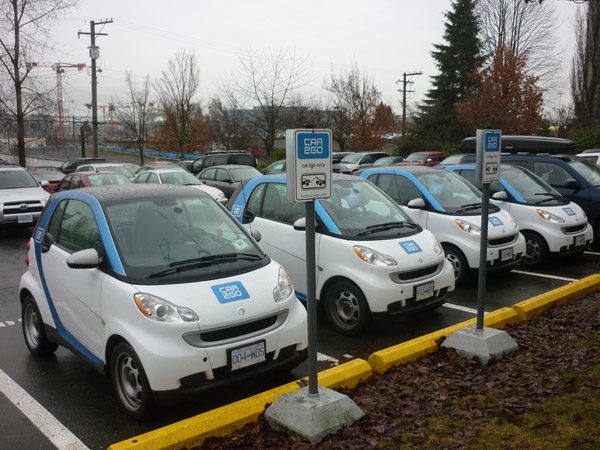
Reading about The Unstoppable Rise Of The Share Economy in Forbes Magazine, I get a strange feeling in my belly. There is, on one hand, the automatic delight at seeing the word "share" so prominently featured, as if it were walking down the red carpet on the way to accepting its Oscar, signaling to the world that it finally "made" it. I mean, who can resist the allure of smiling multi-millionaires who "share" their way to fame and fortune or savvy part-time entrepreneurs who "spin scraps into gold" to spend their life chilling on a beach in Costa Rica?
On the other, less star-struck hand, flashes of childhood memories of huddling around a box of crayons with my friends keep interfering with this modern "Who wants to be a billionaire?" version of sharing. "Really?" A perplexed voice keeps popping into my head. "That's what this whole sharing thing is about — making money and leveraging the biggest advantage for yourself?" What once used to be the most basic human value your parents ever taught you seems to have magically morphed into a well coiffed, profitable, and fashionably cool buzzword for an entire industry.
Don't get me wrong, I like Airbnb and Zipcar. They are great services that might as a whole conserve a few resources and on an individual basis bring a little more joy into the world. I have no problem that their founders are wealthy and treated like rock stars. I'm just feeling reluctant to hand them the word "sharing" on a golden platter. I mean, really, let's be honest here — if you have to pay to share something, it's commonly known in the English language as buying or renting.
The fact that Zipcar just got bought up by Avis just shows how little daylight there is between a traditional car rental and a car share company. Long before sharing was all the rage, we were sharing that Avis Compact with all the German tourists. And what about that lovely Bed & Breakfast near Lake Geneva my girlfriend and I recently stayed at, with the most delightful hosts you could imagine? It wasn't on Airbnb, but we paid to stay with locals who generously shared with us homemade cake, travel tips, and laughter. What's to keep them from selling themselves as a house share? Or for that matter, what's to keep Disneyland from marketing itself as an experience share?
Taken to its logical conclusion, the whole idea of the "share economy" seems pretty redundant. Isn't the sharing of goods, services, property or experience in exchange for money or other agreed upon currency the very definition of "economy?" Even the idea implied in "share economy" that we would make the best use of existing resources and space isn't really alien to the boring old economy — airlines don't call the space on the plane shared by the largest number of passengers "economy" for nothing.
I don't mean to rain on the parade, but I'm worried that "sharing" is turning into the new "green," another once well-intentioned word that has become an overused and mostly meaningless marketing gimmick, like Samsung's recent "We All Share" campaign. I know that making money and clever marketing is the holy grail of capitalism, and one could argue that rebranding rentals as shares might ultimately help to bring a more collaborative attitude into the mainstream, just as driving a hybrid may lead to a deeper ecological understanding or buying a yoga mat could be the gateway into spirituality.
But is this rising tide of popularity and commercialization really going to lift all the smaller boats that carry the more sublime meaning of sharing? Will it make us more generous and compassionate? Inspire us to listen to each other more intently? Come together in the town square more frequently? Commit random acts of kindness?
I don't have the answer, but I like the questions. Maybe there needs to be a better definition or qualification of the word "sharing" as it relates to its different uses. For example, when everyone started to use the word "Green" in the building industry, the US Green Building Council came out with its LEED ratings system, a framework by which architects and builders can attain different levels of verifiable environmental standards. Could the market-based terrain of peer-to-peer commerce establish a similar scale of sharing, ranging from purely altruistic to purely commercial, perhaps under the Collaborative Consumption umbrella?
Whether the new multi-billion dollar sharing industry becomes more discerning about the use of the word, I don't have any control over. However, as a consumer, I'm not buying it anymore. Is there anything inherently more noble or environmental about Zipcar than Avis? If there is, I'd like to know. If there isn't and the difference is simply in price, convenience, and hipness, then why rent a Zipcar for a day if I can get a better deal from Avis and I'm close enough to a pick-up? I guess we'll come full circle in this brave new collaborative competition once the Avis/Zipcar merger is complete and we start seeing "Avis Car Share" Fiat 500's on the corner.
In the meantime, whether I'm renting through Airbnb or staying in a hotel, I will approach whoever my hosts are with an open heart and a big smile, knowing that I will be sharing space and essence, whether it is advertised as such or not. And just to play it safe, I will reserve the word "sharing" for my roles as citizen, friend, and neighbor, giving freely of myself, whether it's things, skills, or time, just because in my world what you give is in the end what you receive.
Rate this article
Comments
Great comment, Matthew.
I just got an email from a friend who made an interesting observation:
"Taking advantage of people who want to share scarce resources is exploitation. Let's don't create the next Meg Whitman. Resource sharing agencies that require money to exchange hands for resource usage are not a bad thing. However, they need to be run as B Corporations, Cooperatives or other kinds of socially conscious businesses, which distribute any surplus among members, so that we don't set up opportunities for such exploitation."
I like that idea. Asking them to become B Corporations or Cooperatives would be one way to hold these companies somewhat accountable to the rhetoric, to see if they actually walk their talk and are truly interested in sharing their wealth and creating a more equitable society and world.
This echos concerns that I have held for a while regarding the overuse and improper designations for the terms sharing, community and coops.
I have always been perplexed that airbnb and zipcar were consider anything other than useful, smaller alternatives to their corporate mega brethern. If profits are being made and not being put back into the collective "share", it is a business pure and simple.
Perhaps it is the old hippie in me, but I have come to understand that notions of community, sharing, and coop ventures cannot not wander out side of a specific size and locality or they are co-opted by business with a capital B and morph into the very opposite idea of the original venture....but maybe it's me having become jaded after all these years?
This is the first time I'm visiting this site, so forgive me. I followed Sven here. This post exemplifies challenges in the good fight in many ways, thus my long comment:
I hate the word's overuse, but I'll write it anyway, "quagmire." A segment of society clamors for the rest to pay attention to a concern. Then, the attention obtained leads to popularity which makes it a trend, which leads to market targeting, which leads to profit. Green. Sustainable. Harmony. Ecofriendly. Organic. Biodegradable. How do you get everyone on board without sinking the boat?
One way is to clearly identify the meaning of the word/goal from the start, most often through public education and outreach. Teach the public before the profiteers do. But "sharing" presents a great challenge because, unlike organic, there is no simple, tangible way to describe what you're going for. Born from an easy-going ideology, it suffers from an easy-going definition which doesn't do well in a commercial society of rules.
Flip this over, though. I want to help people. I want to make a living helping people. I have a bad image of money; money is evil, wanting money is greed. Sometimes this crippling persepctive is called lightworkers syndrome, and its something that healthcare workers must overcome quite often. Nurses and doctors need to be paid in order to care for themselves and stay educated. There may not be enough chickens around to pay for the commitment required by a country doctor to do his or her job. Time and again, well-intentioned people fail in business or a career because they have problems accepting money for their talents or kindness. Society then suffers when all we have left is Zipcars.
To combat lightworkers syndrome, counselors point out that money is simply the leveling mechanism in trade (a.k.a. sharing). I believe, for the sharing venture to be understood then, one must show how removing this mechanism makes things different. There will always be doctors who want all the chickens as well as doctors who would give care for free. How does "sharing" bring abundance to the better man? Or can it just be enough that sharing yields fewer cars, houses, and stuff which helps achieve the goal of reduced consumption?
good point, Jill. I think you've got your hand on the pulse of things here. Just as diversity of species and plants is the lifeline of a healthy planet I'm convinced that the only way we can have a healthy human ecosystem is to have many smaller pieces that interact and form an intricate whole system. When corporations get too big they can no longer respond to ever changing and evolving conditions and they just end up squelching the nuances and vibrancy of a healthy and functioning organism. Of course the question arises at what point is a company too big, but we usually know it when we see it, and it seems that at least Zipcar may have reached that threshold.
Great to "see" you over at Shareable, Ruth! I think your comment also speaks a bit to what Jill said about size. Most things in moderation are great, but when it's overdone it can have a negative feedback loop. But you're right, how could we ever have too much sharing? I wonder if it comes down to some of the more old-fashioned values like genuineness and trust, which comes through direct human interaction. And this is where it gets complicated, because a company like Airbnb enables so much heartfelt connection and sharing among its users, but the interaction with the company itself at this point is pretty much just as with any other mega corporation. So it just has to be several shades of gray when it comes to determining for each of us how we feel about these companies.
As far as the money, I don't have a problem with it, it's a means of exchange that we all depend on for survival. I think it's cool that people get to make extra money renting out their homes or cars. I just get suspicious when too much of the pie gets funneled to just a very few, which is what happens with most corporations. That's why I think if these peer-to-peer sharing companies really wanted to walk their talk, they would register as Benefit Corporations or Co-ops.
Sven: Thanks to your reply to my ridiculously long comment. Benefit Corporations should prove to be a real solution as more people learn about them. Also, genuineness and trust and human interaction -- those are rules that make a great game. And yes, I completely agreed with Jill.
Please support the Zipcar petition!
http://www.change.org/petitions/zipcar-don-t-sell-out-to-avis
It is sharing if it's your car too and you share it with others.
Sven, thanks for the ecosystem analogy! This frame makes it so much easier to explain my views to other people not already familiar or even distrustful of the shareable/coop/community mindset.
Perhaps i won't come off as such a crabby dinosaur afterall!
Haha, Jill, you never came off like a crabby dinosaur at all, though crabby dinosaurs are pretty adorable. ;-)
Another good analogy for the ecologically balanced approach that ecocity pioneer Richard Register likes to use is the human body, where every individual part contributes just as much as is needed for the whole organism to be healthy. The body doesn't respond well to excess, whether that's overeating or sitting in one position for too long. It functions so miraculously because all the different organs are important in their interaction with one another.
We keep trying to bypass that most basic of secrets to life, whether it's through machines, monocrops, or other standardized one-size-fits-all inventions, but each time we try that, new problems arise. It always comes back to diversity, moderation, and localized systems, and while some large corporations may be able to somewhat adapt to local diversity, it's simply not in their nature to be tuned into these extremely nuanced local functions. While their intentions may be to help a lot of people all at once, the danger is that they often wipe out all the subtle local nutrients that enable small communities to self-sustain.
I really like peer-to-peer sharing because it enables people to reconnect on a very local and intimate basis, but when the entities that administer our personal interactions are increasingly becoming big, centralized, and top down entities it's worth questioning whether they're beginning to thwart their own original intention.
First time on shareable.net and can't keep my self from replying to all those wonderful comments here.
First: thank you :)
I see the humankind as a childish kind of beings. Animals that have yet taken responsibility for all life. The more conscious of us are paving new ways that the toddlers are keep to dissect for their own interests. And I believe it's ok - they are learning, many have yet to find their path. I share because of the Love that flows through me. There is no further goal. I don't mind starting all over again because it is worth it every single time.
People using "Share" companies will find out sooner or later that it is not really new and that they are still in a contracting world. It is important for us to be mindful and make sure we don't hurt our fingers when a door of the old contracting world slams shut. The era of separation is coming to an rapid end and sometimes the best we can do is just witnessing it with compassion.
This brings me to a peculiar thing called money, also known as: negotiable instruments, bills of exchange, promissory notes, money orders, postal notes, cheques..
Money is quite a vague thing. Few of us know what it is and how it really comes into being. Most of us easily become slaves to it. As of today, it is a rigged system so why would you want to play a game that you don't really understand? Most financial institutions are committing fraud on a daily basis which can only happen thanks to the dark foundation that the monetary systems are built upon.
I am not suggesting we ought to live without money. It's like a parasitic infection. You won't want to cut off your leg because of that. The whole situation will heal when we stop wanting what we are not and concentrate on what we already are. It is impossible to become something that you already aren't in your heart. We can either accept what is or we can fight against it. One brings peace and harmony, other suffering. This means not lending our hand to old ways but inviting everyone to a dance of the miracle of what we are: Love.
First time on shareable.net and can't keep my self from replying to all those wonderful comments here.
First: thank you :)
I see the humankind as a childish kind of beings. Animals that have yet taken responsibility for all life. The more conscious of us are paving new ways that the toddlers are keep to dissect for their own interests. And I believe it's ok - they are learning, many have yet to find their path. I share because of the Love that flows through me. There is no further goal. I don't mind starting all over again because it is worth it every single time.
People using "Share" companies will find out sooner or later that it is not really new and that they are still in a contracting world. It is important for us to be mindful and make sure we don't hurt our fingers when a door of the old contracting world slams shut. The era of separation is coming to an rapid end and sometimes the best we can do is just witnessing it with compassion.
This brings me to a peculiar thing called money, also known as: negotiable instruments, bills of exchange, promissory notes, money orders, postal notes, cheques..
Money is quite a vague thing. Few of us know what it is and how it really comes into being. Most of us easily become slaves to it. As of today, it is a rigged system so why would you want to play a game that you don't really understand? Most financial institutions are committing fraud on a daily basis which can only happen thanks to the dark foundation that the monetary systems are built upon.
I am not suggesting we ought to live without money. It's like a parasitic infection. You won't want to cut off your leg because of that. The whole situation will heal when we stop wanting what we are not and concentrate on what we already are. It is impossible to become something that you already aren't in your heart. We can either accept what is or we can fight against it. One brings peace and harmony, other suffering. This means not lending our hand to old ways but inviting everyone to a dance of the miracle of what we are: Love.
Beautiful comment, Sven. And nice name, if i may say so. ;-)
This is a good way to look at it from a broader, more emphatic and universal way:
"The era of separation is coming to an rapid end and sometimes the best we can do is just witnessing it with compassion." I hope you are right.
I also really like this: "The whole situation will heal when we stop wanting what we are not and concentrate on what we already are."
That seems to be the ultimate purpose of life once all the layers our brains create are peeled back. It is worth remembering in every aspect of our lives that when all is said and done and we leave our bodies, the purpose of it all most likely wasn't to accumulate a bunch of stuff that we can't take with us, but to simply become more conscious of our ability to love and evolve as eternal souls.
Great article, Sven! You ask lots of thoughtful questions, as evidenced by the many thoughtful comments in response.
I once heard Janelle Orsi -- author of The Sharing Solution, co-founder of the Sustainable Economies Law Center, and a member of Shareable's advisory board -- say that her legal practice was no longer taking on for-profit sharing-related clients. I imagine that her decision touches on your point about wanting to see these companies become B Corporations or cooperatives -- there needs to be a greater social purpose than profiting from reducing waste and increasing sharing (even though these are important benefits).
I'm mindful of the concerns folks have raised about the dilution of the term "sharing" (as happened to "green") and intrigued about your idea of a rating system, such as LEED certification. While at Shareable we've tended to see it as important to open people's imaginations to the many ways that we all share, it might be useful to classify or make distinctions between different forms of sharing projects. It tends to boggle my brain when I think about this, but it might make for a good collaborative activity. Anyone interested in that?
Finally, Sven, you ask "how could we ever have too much sharing?" and I mostly agree. I also recommend checking out Ursula Le Guin's novel The Dispossessed. It offers a non-utopian view of a world without possessions and an extreme degree of sharing. There was a lot I liked about the vision of this novel, but Le Guin also explores some of the potential downsides. In the end, as you say, I agree that balance is really the key.
Great article, Sven, and a wonderful discussion you've sparked and encouraged - thank you.
I think the questions you throw out prove your definition of a true sharing effort:
"Will it make us more generous and compassionate? Inspire us to listen to each other more intently? Come together in the town square more frequently? Commit random acts of kindness?"
I'd tend to agree with you, idealistic and utopian as it may be, but am willing to commingle these ultimate goals with living in our capitalist society. That being said, sharing my car (through RelayRides, a for-profit company), for example, is the peer-to-peer model you support, and it helps to achieve some of those objectives.
CouchSurfing.org is another example of an organization navigating these sharing values and trying hard to prioritize the rich community that has developed on their platform.
I second Seth's calling out of Janelle Orsi and recommend another of her books, "Practicing Law in the Sharing Economy". She calls for a reconsideration of business interactions and a recognition that in the "new economy, entrepreneurs will be successful based on the relationships they build with others, not on their ability to compete with others."
I look forward to seeing how this all evolves and am glad you all are a part of it.
I agree with your concerns, but perhaps one can look at such platforms as airbnb and taskrabbit as the gateway towards bolstering more legitimate p2p transactions...As p2p transactions go, airbnb and taskrabbit are not too far off from market mediated transactions, but they do have just enough of the p2p experience that perhaps they can encourage people to try the more legitimate non market experiences like bartering or indirect exchange (neighborgoods and freecycle) later on.
This "institutional legitimacy" that the corporate stamp gives to these platforms I think is the necessary evil we must endure as the option of the p2p economy takes on a stronger presence in the collective consciousness.
Seth & Caterina, thanks so much for stopping by and adding such thoughtful comments. If nothing else, I feel like my post has already served its intended purpose of sparking an intelligent, constructive, and inspiring discussion. I think it's in this spirit of co-creation that we're going to unravel the sweet spot of sharing in the most beneficial way for the largest number of people and all other residents of planet Earth.
When I wrote about a LEED Certification for sharing I'm not even sure if I was completely serious. A former job had me following the LEED development process somewhat closely, and with each standard that was set a flurry of new questions and complaints seemed to arise. Then again, I'm currently on the advisory board to develop an international framework for entire cities to assess their progress toward becoming ecologically healthy (http://www.ecocitystandards.org). If it can be done for something as complex as an urban organism, why not also for sharing principles, if only as a set of guidelines?
I like the idea of this being a collaborative activity, sort of a casual, exploratory, and ongoing discussion with the aim to dig a little deeper into the different shades of sharing and some indicators for each of these different shades. It would be cool to involve all the different stakeholders in the process, because even if it never resulted in any kind of binding ratings system (which it probably shouldn't and can't) it would be a great exercise for everyone to think about the language they use and how it is received by others. Just some basic Human Communication 101, which is the foundation of our shared existence on this planet anyway, so from a Shareable perspective you couldn't go wrong either way.
I'll put Janelle Orsi and Ursula Le Guin on my reading list. I've heard of them but haven't had a chance to read their work.
I am definitely a big advocate of balance, and it is based on the diversity aspect of life's organisms that I described above. We humans tend to overdo it when we think we have a brilliant idea. All too often we connect two dots and call it a philosophy, before realizing that there's nothing that works for everyone all the time.
So while sharing is a wonderful human sentiment as well as just a basic condition for the very existence of civilization, it is not something that can be superimposed on every motivation or act. We're too nuanced, too diverse, too mysterious for that. We all have egos and personal needs, some more than others. So it's good to acknowledge that as a healthy part of our nature too (in moderation, of course ;-), and not desperately try to force everything under a sharing umbrella just because it sounds good and neatly fits into this ideology we've constructed for ourselves.
As one famous Irish philosopher likes to say, or rather, sing, "we're one, but we're not the same."
Totally agree with you, Gabriel, most of these platforms don't have to be an end to themselves but perhaps an introduction to more personal exchanges without a middle man. As Alexandra Liss, the director of the documentary One Couch at a Time says, "couchsurfing was my gateway drug to the sharing economy." In the same vein, renting through Airbnb could be a total gateway drug to opening your doors to your neighbors for someone who has always stayed in hotels.
It'll be interesting to see how far and deep the corporate sharing companies can really ingrain a genuine sense of generosity in our collective consciousness. My sense is that there's a limit to how much they can do it for us, the real transformation will have to take place without branding.
Take a good look at how couchsurfing has fraudulently been taken over by venture capital. Now the whole community feel of the site is slowly eroding thanks to utter mismanagement. For example, just today the very successful "new member welcome" was taken down, without any notice whatsoever. Meanwhile the chance of things going wrong are increasing rapidly because of the way the community is stifled - for example, girls posting their phone numbers on pages that are indexed by google without any warning.
It's still a B corp (note: not a benefit corporation) but I see that B as in B actor. B corp means "watch out" to me at this point.
Fortunately there is a non profit alternative: Be Welcome.
(Which can and will never be sold out.)
Hi Sven,
Excellent article, great questions and really interesting comments.
Russell Belk has written a lot about this which I think is relevant to the discussion. He suggests the ideal characteristics of a 'prototype' of sharing are that ownership is shared not transferred, there are no obligations for reciprocity, it is informal, personal and altruistic. This can be contrasted with ideal commodity exchange and gift giving and constitute the three 'prototypes' for acquiring and distributing resources in a society.
Most of the start up businesses that have been mentioned here don't closely resemble ideal sharing deviating in different ways and to different degrees from the prototype. ZipCar for example is much closer to the ideal of commodity exchange than sharing in almost every aspect - users don't share ownership, they pay, it is formal and impersonal in that you have agreements to sign and you may never meet the people you are sharing from. P2P marketplaces, like ecomodo in the UK, more closely resemble the sharing prototype, however, there is still the option to rent rather than share and user agreements still have to be agreed. The truth is that commercial interest in sharing and will co-opt many of the ideals of the community and result in many sharing-commodity exchange hybrids.
If you believe, as I do, that people desire the social reconnection that sharing allows, but have forgotten how to do it and need more practice, then sharing in any guise helps return the behaviour to the mainstream.
Hmm, interesting. I'm not a member, so I don't know that much about the inner workings of couchsurfing.org, but i'll keep my eye out for more info. As far as B Corp vs Benefit Corp, I'm well aware of the difference and have written about Benefit Corporations before. I agree that the legally binding Benefit Corp status is ultimately more meaningful than a B Corp certification, but let's not discredit B Corp certification because we may not agree with other aspects of a company's business operations. I think those are two separate issues.
interesting points, Adam. So if we were to apply Russell Belk's prototypes into some sort of a ratings system, we'd have ideal sharing on one end of the spectrum and ideal commodity exchange on the other, right? Let's say we assign the color red to ideal sharing and blue to ideal commodity exchange, we'd probably be getting different shades of purple for most p2p companies, as very few are probably purely one or the other. Would that seem like a sensible way to classify companies, as to where on that red/blue slider they fall on? Or are there other measures (colors) that could or should be applied to figure out where on the grand color wheel of sharing a company falls?
Anyway, I'm not sure if this is really the road we need to go down, but it's at least interesting to consider...
Surely sharing would be green and commodity exchange red? That would make peer-to-peer sharing chartreuse right?
Might not allow enough fine detail to be a practical framework...but sure would make for more interesting discussions and arguments!
Green and red would be the most intuitive, you're right. And yes, chartreuse is the word I was looking for. : )
And yes, discussion and arguments would be fascinating. Some tech wiz could even come up with a chartreuse where people could fill in their own assessment of where they think any given company falls, resulting in a crowdsourced aggregate shade on the red/green spectrum. The only problem with red and green is that they don't mix that well...
PS: There's definitely a weird bug with the comments, the secret is to just disregard the error message after posting, because the comments seem to post just fine.
Seth, thank you for this thoughtful post, and for raising a number of points which I suspect many people have been thinking about - 'sharing' becoming a marketing gimmick, a brand, a means of greenwash even. I guess it says something about the power of the idea that there is a desire to co-opt it!
Mention has been made of the kinds of sharing that involve exchange of money as being a 'gateway drug' - that it might be a doorway to non-monetary sharing for people who come to it via leveraging idle/unused assets. It would be an interesting area of study, to learn if and how much monetised sharing contributes to strengthening social ties or forging new connections among people in the same ways as it does with non-monetised sharing.
On a recent Shareble post (Values and the Sharing Economy), I made the point that:
"Car-sharing schemes involve an exchange of cash, but if it results in less people needing to buy a car, it has the same result as many of the no-cash platforms - people don't need to spend unnecessarily, and don't accumulate stuff they don't need. Conversely, even with no exchange of money, there is still an element of self-interest in food swaps - getting something you need in exchange for something you don't.
The 'personal gain' and 'self interest' side of the sharing economy is not mutually exclusive from broader environmental/social justice issues. Aside from Airbnb and a few others, there aren't fortunes being made in developing sharing platforms (and if people do come into great financial benefit for making life easier, cheaper and more environmentally responsible, then good, they deserve it!), and the people I know who are creating these absolutely do have a social and environmental ethos driving them.
The stories coming out of the US, where people who've been made redundant through the circus that is the existing economic modus operandi and are now able to generate an income from whatever via these platforms, are just as much part of the social justice story. I think Airbnb bringing in tourism dollars to areas that aren't 'tourist' is social justice. The whole disruption of a broken political economy by collcons is social justice!
All of them in some way help people save money and/or supplement and earn income; all have the potential to create new social connections; and all contribute to less demand for resources and associated carbon emissions."
Yet I - along with many others - do harbor suspicions about too-big corporations (although whether this matters so much if a corporation is fostering P2P connections I'm not sure).
Re: benefit corporations, a related initiative is a project that the network I co-founded in 2010, the Post Growth Institute, currently has under development:
http://postgrowth.org/learn/how-on-earth/
Donnie's talk is 50 minutes well spent, where he outlines his hypothesis that in the near future, for-profit companies will no longer be competitive compared to their equivalent not-for-profit enterprises.
Lastly, great to hear you citing the work of Richard Register, and that you are involved with developing the International Ecocity Standards! I cut my teeth in the environment movement in Adelaide in the 1990s with Urban Ecology Australia, inspired by Richard's first organisation Urban Ecology (founded 1975 in Berkeley). UEA was the driving force behind Christie Walk, a piece of ecocity in the CBD of Adelaide, capital of South Australia http://bit.ly/hcSSt5
Although while networked diversity = greater resilience than top-down imposed monoculture, I'm not sure about the analogy of society and the human body - because doesn't that mean that someone gets to be the brain or heart, and some poor sap has to be the a*hole? ;)
Thanks again Seth - I've probably spent more time thinking about this post than any other on Shareable thus far.
Ruth, I've not heard the term 'lightworkers' syndrome' before, but I recognise it! I wrote a similar post on my blog about 'Money Martyrdom':
http://www.cruxcatalyst.com/2012/02/07/money-martyrdom/ (see 'The Money Martyrdom Playlist')
Seth O, if you are not already aware, you may be interested in the work of Positive Money www.positivemoney.org
Seth, thank you for this thoughtful post, and for raising a number of points which I suspect many people have been thinking about - 'sharing' becoming a marketing gimmick, a brand, a means of greenwash even. I guess it says something about the power of the idea that there is a desire to co-opt it!
Mention has been made of the kinds of sharing that involve exchange of money as being a 'gateway drug' - that it might be a doorway to non-monetary sharing for people who come to it via leveraging idle/unused assets. It would be an interesting area of study, to learn if and how much monetised sharing contributes to strengthening social ties or forging new connections among people in the same ways as it does with non-monetised sharing.
On a recent Shareble post (Values and the Sharing Economy), I made the point that:
"Car-sharing schemes involve an exchange of cash, but if it results in less people needing to buy a car, it has the same result as many of the no-cash platforms - people don't need to spend unnecessarily, and don't accumulate stuff they don't need. Conversely, even with no exchange of money, there is still an element of self-interest in food swaps - getting something you need in exchange for something you don't.
The 'personal gain' and 'self interest' side of the sharing economy is not mutually exclusive from broader environmental/social justice issues. Aside from Airbnb and a few others, there aren't fortunes being made in developing sharing platforms (and if people do come into great financial benefit for making life easier, cheaper and more environmentally responsible, then good, they deserve it!), and the people I know who are creating these absolutely do have a social and environmental ethos driving them.
The stories coming out of the US, where people who've been made redundant through the circus that is the existing economic modus operandi and are now able to generate an income from whatever via these platforms, are just as much part of the social justice story. I think Airbnb bringing in tourism dollars to areas that aren't 'tourist' is social justice. The whole disruption of a broken political economy by collcons is social justice!
All of them in some way help people save money and/or supplement and earn income; all have the potential to create new social connections; and all contribute to less demand for resources and associated carbon emissions."
Yet I - along with many others - do harbor suspicions about too-big corporations (although whether this matters so much if a corporation is fostering P2P connections I'm not sure).
Re: benefit corporations, a related initiative is a project that the network I co-founded in 2010, the Post Growth Institute, currently has under development:
http://postgrowth.org/learn/how-on-earth/
Donnie's talk is 50 minutes well spent, where he outlines his hypothesis that in the near future, for-profit companies will no longer be competitive compared to their equivalent not-for-profit enterprises.
Lastly, great to hear you citing the work of Richard Register, and that you are involved with developing the International Ecocity Standards! I cut my teeth in the environment movement in Adelaide in the 1990s with Urban Ecology Australia, inspired by Richard's first organisation Urban Ecology (founded 1975 in Berkeley). UEA was the driving force behind Christie Walk, a piece of ecocity in the CBD of Adelaide, capital of South Australia http://bit.ly/hcSSt5
Although while networked diversity = greater resilience than top-down imposed monoculture, I'm not sure about the analogy of society and the human body - because doesn't that mean that someone gets to be the brain or heart, and some poor sap has to be the a*hole? ;)
Thanks again Seth - I've probably spent more time thinking about this post than any other on Shareable thus far.
Ruth, I've not heard the term 'lightworkers' syndrome' before, but I recognise it! I wrote a similar post on my blog about 'Money Martyrdom':
http://www.cruxcatalyst.com/2012/02/07/money-martyrdom/ (see 'The Money Martyrdom Playlist')
Seth O, if you are not already aware, you may be interested in the work of Positive Money www.positivemoney.org
Hmmm - there should be a way to edit comments and delete inadvertent duplicates. Pretty sure there was? I may be missing something?
Ah yep - I was not logged in when I posted my comment! Now I can edit and delete...
Thanks for mentioning Russell Belk's work. I hadn't heard of him before, but did a quick search and came up with this 2010 article from the Journal of Consumer Research: http://www.dies.uniud.it/tl_files/utenti/crisci/Belk%202010.pdf. The seventh page of the PDF has a table that lists attributes of prototypical sharing, giving, and commodity exchange. Interesting stuff.
Sharon, regarding your point:
"It would be an interesting area of study, to learn if and how much monetised sharing contributes to strengthening social ties or forging new connections among people in the same ways as it does with non-monetised sharing."
I have no idea what the answer might be, but it would be a great study to have.
You addressed your comment to "Seth" but I believe you meant "Sven".
Finally, as you and others have pointed out, we do have a bug with our comment system. It's causing duplicate comments to get posted because it looks like the first comment posting failed. We'll see if we can address this, but with the redesign of Shareable coming up, we may end up holding out until that system is ready.
Oh I did, my apologies, Sven! Freudian slip. I'd had a no-sleep night with a family member in the hospital the day before which may explain my brain malfunction :)
Thanks for posting that link to Belk's work Sven (I mean, Seth!)
I totally agree we need a better word for sharing. I'm trying finish my phd thesis on the topic and its a really slippery term, especialyl when trying to contextualise amongst the collaborative consumption language.
I was particularly excited to see this question posed:
"It would be an interesting area of study, to learn if and how much monetised sharing contributes to strengthening social ties or forging new connections among people in the same ways as it does with non-monetised sharing."
I'm a month or two away from submitting a PhD in which I investigated what it means to share (conceptually and in practice) according to residents in suburban Melbourne Australia. Particularly I looked at people who are a part of a sharing network (thesharehood.net) a not-for-profit loca sharing network, and also those living in the outer suburbs apparently not interested in sharing.
Although not directly the question my work was seeking to answer, I think that in a local (rather than national or global) context, monetarised sharing does NOT strengthen ties as much as non-monetarised sharing does. And this is because non-monetarised sharing, with strangers (or acquaintences) in the Australian cultural context, involves elements of social vulnerability and risk. For Australians generally, the act of asking a favour is to suggest that we are unable to look after ourselves, that we are incompetent and not self sufficient. To engage in systems of exchange outside of the monetary economy is to step outside our comfort zones around normal behaviour (we all know exactly what is involved in the exchange when we purchase a toothbrush at the shops - i get toothbrush, shop gets money). In non-monetarised exchange, the rules of social itneraction are less clear, yet no less strong. In asking you for a favour, I am also offering my future obligation to repay and thus offering you the gift of a possible ongoing relationship. If i pay you for the favour, we cut of the need to ever see each other again. Of course ,it's not that simple, but I do think we need to consider monetarised and non-monetarised exchanges differently.
Oh so much interesting discussion to be had!!
Sometimes these comments can seem like "Ask and ye shall be answered." ;-)
How interesting that your research broadly intersects the area that we've been discussing on this comment thread! Would you be interested in writing a really brief, layman's version of your research for a post on Shareable? And do you know of any studies that have looked at this question more directly?
Ha ha yes, a good lesson to us all! I'd love to write a post for Shareable. What is your usual word count?
Perfect timing, I have a week off while someone else is thinking about my thesis draft.
That's great, Millie! I'd aim for 600-800 words, although it's okay to go a little longer than that. I'll follow up with you via email.
Oh and no other studies that I am aware of, I'm surprised there isnt more academic work into this.
Sharon, so cool to hear from you, what a nice confluence with Urban Ecology and ecocities. Paul Downton is on the IEFS advisory board, and while I have not met him in person, his writings and correspondences always bring the conversations to a higher level. A bit like your contribution to this thread. :-)
I love that there's been an ecocity/whole systems sub-thread evolving from the original post. There really is a natural affinity between the idea of a sharing economy and ecocity principles, and if there were some sort of system to quantify the different aspects of the sharing economy, its indicators would probably work quite nicely in the "Healthy & Equitable Economy" category.
But there isn't, and perhaps there can't and needn't be a system to qualify and quantify something as elemental and sacred as the realization that we're all in this together. It's almost like if we want to get this one right, we have to get it right from the heart much more than from the intellect.
This, of course, is something that could be said about most everything else in our hyper-rational western industrialized world — we've got plenty of brain power and micro chips that hold billions of gigabytes of information, but no matter how much we try, we seem to be unable to come up with algorithms for compassion, generosity, or wisdom, and I doubt we ever will.
So in some ways I file all the super technical and highly regulatory approaches to solving our massive systemic problems under Einstein's famous view of insanity — doing the same thing over and over and expecting different results. We can't measure, streamline or subdivide our way out of what I perceive to be a crisis of consciousness, and perhaps in this spirit we should just leave the definition of sharing alone and trust people to know it when they see it and draw their own distinctions if needed.
That said, in the absence of any kind of firm sharing assessment, it is worth discussing the merits as as well as potential pitfalls of emerging sharing "industries," at least within an economic context. You mention social justice, and I think that's an important one, because while the sharing economy often does level the playing field for some, it can have unintended consequences for others.
For example, while the p2p taxi service Lyft is really hip, social and convenient, it also directly undercuts local cab drivers who have to go by pretty strict city regulations that make sure competition is fair and everyone gets their slice of the pie. So yes, it's cool that Lyft creates new economic opportunities for anyone with a car and part of me loves the almost subversive disregard for rules or conventions, but there's not much social justice in that for the cabbie who's been scraping by for years doing graveyard shifts and is now losing business to these new entrepreneurs who aren't bound by the same playing field as everyone else. Ditto with Airbnb taking away business from hotels and hostels, which at first glance is no big deal and perhaps a good thing in regard to building a different kind of society, but at the same time the hotels pay taxes to the city which is ultimately our common trust that makes sure services from parks to public transit are available to everyone.
I do think that as p2p businesses mature they will come to value at least some of the traditional ways of ensuring equity that they've been bypassing. Nobody likes paying taxes or dealing with layers of bureaucracy, and yes, in a perfect world there would be no need because we'd all be taking care of each other. But in the absence of such a collectively agreed upon arrangement this imperfect yet most democratic and comprehensive public trust remains an important foundation of our shared responsibilities and benefits. I think that companies like Airbnb and Lyft will ultimately come to this place — either on their own or with a little help from the cities they operate in — where they will pay their fair share to support and maintain the most basic common good we all share — our urban infrastructure.
Which leads to the other — infinitely fascinating and hopeful subject — Benefit Corporations. From where I am right now with this subject, this seems to be the most intriguing, hopeful, and natural next frontier in the p2p sharing world. I'll check out Donnie's talk and Post Growth Institute's (who I've been following of course) not-for-profit model. I know that B Corp is in the process of going international (I talked to Jay Coen Gilbert recently http://www.resurgence.org/magazine/article3691-business-for-good.html) but whatever model ends up working best within each country and culture, the fact that businesses whose main purpose is not to make profit are gaining so much momentum all over the globe is really encouraging and exciting. If this, along with spreading a growing sense of generosity, can become the modus operandi for p2p sharing companies, they'll be leading the way into a post-growth world, wholeheartedly.
Millie, I very much look forward to reading your article about your research. Some of the cultural context you mention about Australians' relationship to sharing is really fascinating. It would be cool to see the different results you would get in different countries and cultures, and why. A sociologist's dream project! :-)
Sharon, you cut your teeth in the environmental movement at Urban Ecology Australia and I worked at the Bay Area (original) Urban Ecology for a while in 1999. Small world, eh?
Seth, that's hilarious - you know the world is now two degrees of separation, not six!
Ruth, thank you :)
Glad to have connected Millie into this thread, I am looking forward to hearing more about what she has discovered.
Sven, Paul Downton and his wife Cherie Hoyle were the driving force behind Christie Walk, and have been the most important mentors to me in shaping my understanding and supporting me. They also now live close by me, so I see more of them than I ever have, which is great. Paul's knowledge is mind-blowing, he seems to be to be at least half a century ahead of his time. I was fortunate enough to have him as a university lecturer in the 90s where he was teaching subjects like Urban Ecology, Critical Regionalism and Ecological Architecture.
>There really is a natural affinity between the idea of a sharing economy and ecocity principles
Definitely, and particularly when you think about: are our cities designed for sharing? This is one thing I am trying to get across to the planning community. And we're continuing to design for BAU on the assumption that BAU will persist, when people may well be moving to car sharing and collaborative cooking. I'm not sure if 'design for sharing' is currently reflected in any way in the Ecocity Standards, but if not, it should be!
Re: your points about pitfalls - very true, although the same can be said for restaurant owners with the rise of food trucks; retail with the rise of online shopping. It's a disruption, and when these things happen, adaptation is what makes survival more likely. There is a post on Shareable about a former cab driver who now actually makes his living through ride shares - added to which, I had a family member who was the victim of an attempted assault by a cab driver, and although we knew his cab number and he was licensed and registered, these kinds of things are basically a no-win for the victim in courts. So he went back out there driving around...I would prefer to see a public, transparent rating system of feedback on a car I got into, and this is a major advantage of the sharing vs traditional systems.
Donnie is going to present at The Economics of Happiness Conference in Byron Bay (Australia) middle of this month, and I will be going too. There is a book on 'Not For Profit World' under development to set out these ideas.
A few quick points in response to your most recent comment, Sharon:
- In what may be record-setting time, Millie wrote and just posted a story about her personal experience of asking for a cup of sugar from her neighbor. She weaves it into a larger narrative about what she's learned about suburban sharing in Australia from her nearly-complete PhD thesis. Check it out in the Community Blog: http://www.shareable.net/blog/why-is-it-harder-to-ask-than-to-give
- The taxi-driver-turned-Sidecar-driver story that you mentioned can be found here: http://www.shareable.net/blog/former-cabbie-ridesharing-is-the-future
- Let us know if you or Donnie would like to report back on the conference on Shareable.
mmm. Conventional economy involves centralised ownership of assets or dispensation of services. I think 'share' is more referring to the fact that at their bests, the players in this new economy facilitate the exchange of goods and services that are privately owned or offered. Seems like you just sort of gloss over this fundamental distinction and in so doing, kind of miss the point.
"at their bests, the players in this new economy facilitate the exchange of goods and services that are privately owned or offered."
That may be true "at their bests," but the whole point of the article is that perhaps not all the companies that benefit from the share economy label are at this "best." Zipcar, one of the examples I use, owns all their cars. So my question is what makes them different from a traditional rental car company, other than the fact that they offer more pick-up locations?
If the fundamental distinction for a company to be part of the share economy is, as you say, to "facilitate the exchange of goods and services that are privately owned or offered," then Zipcar would not be part of it, whereas Airbnb would.
Does it diminish the spirit of the share economy to have companies with centrally owned goods use the label, or is it better to leave it to each of us individually to decide which ones are authentic?
The point of the article was to spark exactly this kind of dialog about the different shades of sharing, and if perhaps there are ways to distinguish between them. If you read through the rest of the comment thread, you'll see a lot of interesting angles and perspectives on these shades, and I think it's a conversation that has only just begun.
Much of this confusion is caused by our misunderstanding the true origin of profit.
Profit measures the consumers lack of ownership in the means of production.
From the consumer's perspective, you might say profit is the inverse of property. We could write that as profit == 1/property.
And so profit is eliminate (does not occur) when the consumers own a car-sharing service and accept the product (car usage) as their return on investment.
This must be *real* property ownership that allows the consumer to receive the product without purchasing it back from the collective others.
For example, imagine a car-sharing service that is fully owned by all the people who have need of that service.
Each investor is a future consumer that is funding the operation for the sole purpose of receiving the product at the real cost and under their full control.
Each consumer/owner receives the same % of the product (car usage in this case) as the amount of co-ownership they have paid for.
Each consumer/owner must pay their portion of all the initial and recurring costs of operation, just as any corporation must, but they cannot pay profit because they do not *buy* the product - they receive it as their ROI.
This is a generalization of the concept described at http://Wikipedia.org/wiki/Imputed_rent which explains that governments cannot even collect taxes because the transaction has been short-circuited and simply does not exist.
This solves the 'static' case where each consumer co-owns exactly the right amount needed to supply them with the product they predict they will need.
The 'dynamic' case must address imperfect predictions (you suddenly need a car when you did not expect it) and where non-owners are being allowed to rent the cars.
I have a good answer to this, but it takes some time to explain, so will save it for a follow-up post.
I'm not sure if I understand everything you say, Patrick, but some of what you describe, like "imagine a car-sharing service that is fully owned by all the people who have need of that service," sounds to me a bit like a worker-owned cooperative, a route I would love to see more peer to peer sharing companies take. http://www.shareable.net/blog/how-to-start-a-worker-co-op
yes, and whatever excess profits accrue, insetad of going to some corporate headquarters in the sky, is put into local garages for maintenance and repair of the fleet.. towards local auto shops which supply non-counterfit parts and perhaps even toward a formal/informal mechanic training program for local people...young onesstarting out and those in need of reskilling.
This sharing model is applicable for many other areas.
Hi Sven,
The people in need of that service are the customers, not the workers.
The customers already pay all the costs of operation (and even more when they pay profit), so it is easy to see they can afford to be the owners.
We could use modified crowd-funding approach to get such a business started - where the future customers fund the business in return for real co-ownership.
The product (car use in this case) is never sold* because the people who need it are the owners already - as a result of their owning the means of production (the cars and mechanic shop and tools, etc.).
(*) Each customer will try to invest exactly the amount needed to cover the amount of car usage they predict they will need.
But most customers will want to own slightly more than they need (let's say 10% extra) to insure they have sufficient access in case of emergency; and there are other surplus that may rarely be used - such as time-slots very late at night in the middle of the week, etc.
If we open the business to sell that surplus to 'outsiders' that have no ownership, we will be renting the cars just the same as any car rental agency and will likely be able to collect profit.
We can invest that profit to grow the business - buying more cars to keep the 10% padding - but if we want the business to remain stable, we must treat some amount of that profit as an investment from the payer so the growth is autodistributed to those who paid for it.
I agree Jill except for one missing detail.
The latecomers who paid the profit are consumers in need of ownership.
Their overpayment is the source of that growth.
To insure the business remains in the hands of the people who need those services, we must treat some % of that profit as an investment from the person who paid it.
Treating profit as the payer's investment auto-distributes control to those who paid for that growth.
This creates a situation where the use of money is minimized.
Of course you don't buy that which you already own...
Traditional business uses property to sell product.
But property can be used to *avoid buying* product.
The owner of a car does not need to buy access to that vehicle because he owns it already as a side-effect of his owning the car.
The co-owners of a car pool do not need to buy access to those vehicles because they own it already as a side-effect of their co-owning the cars.
A follow-up article might be titled "Sharing for Product - We're Not Buying it Anymore" since we, the consumers, do not need to buy the product when we own the means of production ... we own it already!
This is the first step toward eliminating the use money while retaining specialization and efficiency-of-scale.
The next step is to accept promises to work in the future as another form of investment so that workers that cross-commit their skills become co-owners in the means of production for which they need goods and services (not necessarily the means of production which they happen to apply those skills).
This requires a "Production Arena" with enough vertical integration and horizontal diversity to allow workers to be 'paid' by receiving the products they need as a side-effect of their ownership and paying costs by adding work somewhere within that arena that is accepted by others in return for their providing their skills toward the production of the goods and services he needs.
Patrick, this crowd-funding approach certainly sounds like an intriguing idea. Do you know if this has been tried out by anyone yet? Do you think it would be realistic or possible for an existing peer to peer sharing service currently operating under a traditional business structure to make the switch? My feeling is that it would have to be a start-up, where everyone participating in the model is consenting to be co-owners of the business from the get go. I'd love to see any examples of where this has been tried out or even in the developing stages, as I'm planning to explore this topic in more detail.
Hi Sven,
I do not know of anyone using this approach.
An existing service could move this direction by changing their operations to:
1. Treat some (ideally all) profit as an investment from the payer.
2. Treat some (ideally all) investors as real co-owners that are compensated 'naturally' as a side-effect of their co-ownership (it is crucial that co-owners are not buying the product back from the collective others).
3. Treat commitments of future labor as another form of investment so that workers become real co-owners and the traditional payment of wages is avoided.
4. Allow subgroups to secede from the whole for any arbitrary reason. This is an attempt to solve the "Tyranny of the Majority" problem.
>> "Maybe there needs to be a better definition or qualification of the word "sharing" as it relates to its different uses."
There is, and it's been widely theorised: "From each according to his ability, to each according to his needs."
interesting thought, Jess. Would a mature sharing economy look similar to what Marx envisioned fully evolved communism to be? Perhaps in theory, and I think that a lot of the commons-based sharing is already operating under such a fairness principle. However, if that were to be the definition, most of the current crop of market/investor/hierarchical based p2p sharing companies wouldn't qualify, as the CEOs are getting a much bigger slice of the pie than either their abilities warrant or their needs demand.
It's really not as hard to obtain a 501(c)(3) status as portrayed by the people who sold out CouchSurfing. WarmShowers (budget <1k$) has successfully done it recently.
CouchSurfing has managed to obtain the B label based on data from another completely separate non profit entity. The B corp label is only checked about every 5 years.
B corp label already is a sharing equivalent of greenwashing eco label and I have no problems discrediting the label. If I see a "sharing" company holding this label I would think twice before dealing with them in any way. If a US entity is really about sharing they should just go straight for the 501(c)(3) status.
It's really not as hard to obtain a 501(c)(3) status as portrayed by the people who sold out CouchSurfing. WarmShowers (budget <1k$) has successfully done it recently.
CouchSurfing has managed to obtain the B label based on data from another completely separate non profit entity. The B corp label is only checked about every 5 years.
B corp label already is a sharing equivalent of greenwashing eco label and I have no problems discrediting the label. If I see a "sharing" company holding this label I would think twice before dealing with them in any way. If a US entity is really about sharing they should just go straight for the 501(c)(3) status.
It's really not as hard to obtain a 501(c)(3) status as portrayed by the people who sold out CouchSurfing. WarmShowers (budget <1k$) has successfully done it recently.
CouchSurfing has managed to obtain the B label based on data from another completely separate non profit entity. The B corp label is only checked about every 5 years.
B corp label already is a sharing equivalent of greenwashing eco label and I have no problems discrediting the label. If I see a "sharing" company holding this label I would think twice before dealing with them in any way. If a US entity is really about sharing they should just go straight for the 501(c)(3) status.
B Lab (the nonprofit behind the B Corp) has a confusion-challenge on its hands. B Corp is a label, yes, but it's an audited label. Benefit Corporation, however, is a different animal, an additional B Lab creation. It's not just a label; it's a business status, just like 501(c)3. It's not yet available in every state, but it is certainly worth watching. http://www.benefitcorp.net/
It's really not as hard to obtain a 501(c)(3) status as portrayed by the people who sold out CouchSurfing. WarmShowers (budget <1k$) has successfully done it recently.
CouchSurfing has managed to obtain the B label based on data from another completely separate non profit entity. The B corp label is only checked about every 5 years.
B corp label already is a sharing equivalent of greenwashing eco label and I have no problems discrediting the label. If I see a "sharing" company holding this label I would think twice before dealing with them in any way. If a US entity is really about sharing they should just go straight for the 501(c)(3) status.
Neither B Corps nor Benefit Corporations can solve the problem because they still refuse to admit (or probably just do not realize) the true origin and purpose of profit.
Profit is not a reward for owners to dole-out as they see fit.
Profit measures consumer dependence upon the current owners.
Profit is *eliminated* when the consumers own the corporation and accept the product as the return on investment because, in that case, the product is never sold since it is already in the hands of those who need it!
Profit is undefined when the owners are consumers and product is ROI because the price paid as consumers is simply the costs paid as owners.
This eliminates the need to sell the product and eradicates profit naturally.
For a corporation to be actually beneficial would require they treat some of their profit as **an investment from the payer**.
Treating profit as the payer's investment will cause all consumers to incrementally gain the co-ownership used to finally stop buying the products they need instead of groveling at the feet of those who hold ownership against them (as measured by the amount of profit those owners can collect).
well, I think that rather than viewing it through and all or nothing lens, I think it's most constructive to look at the different certifications and labels as steps in the right direction.
I think B Corp may serve as a good introduction for companies to think a little bit beyond quarterly profits. I agree that you don't have to fundamentally change your business operation to become a B Corp, though it also depends on what business you're in. If you're a product manufacturer and you have to address the life cycle of your product, it's quite a big deal. If you're not selling an actual product and just internet based, it's easier, and that would include Couchsurfing.org. I do think there's a legitimate criticism of Couchsurfing.org's move to have VC investment and become a B Corp, but I would be careful to discredit the motivations behind the whole B Corp label, as there are a lot of people and companies who've done really valuable work and evolved their thinking through it.
The next step is Benefit Corp. As Ruth says, it's a whole different animal, because it fundamentally changes the legal structure of a company. It's still a relatively new option and currently only available in 12 states, though quickly growing. While it's also not perfect and certainly not a recipe to do away with profit altogether, it is a significant commitment to expand a business' modus operandi beyond profit. I say let's get as many companies to register as Benefit Corps as possible, if nothing else, it at least gives us a broader coalition of businesses to talk about an even deeper change towards the collective ownership Patrick talks about.
The consumer-owner and profit eradication idea certainly sounds great in theory, but I think a whole host of other things would have to fall into place before that could become a widespread reality. Most importantly, I think we have to change consciousness, the way people think about themselves and the world we live in, and that only comes with real world experience. A company becoming a B Corp is a step towards being more conscious of values beyond the bottom line, and Benefit Corp even more so, so let's not discount their values because it doesn't solve every problem or discrepancy at once.
I guess my best analogy here is once again the "ecocity" model, an idea I'm pretty familiar with. There's currently no place on earth that would qualify as a true ecocity, because the very idea embodies a fundamental structural, whole systems change. But in the process, many cities are making changes that add ecocity elements, like bike lanes, urban farms, and bringing housing, services and transit closer together, and those are all steps towards changing the way people think about the place they live in.
I think it's important to dream, but you also have to have tangible road marks along the way, and that's how I view B Corps, Benefit Corps, or Worker Co-ops — they're like life boats on the raw capitalist ocean that at least allow us to breathe while we're trying to change the waters we float in.
Btw, please don't be discouraged by the "internal server error" message you get when posting. The comments always go through the first time, no need to repost. It's something with the system here and will be fixed soon.
Apologies for the "internal server error" message that Sven is referring to. We're aiming to have a redesigned Shareable launched by the end of June. We've got details about our plan at this link: http://www.shareable.net/blog/a-plan-for-shareable-20-what-do-you-think (it includes links to the focus groups that we conducted with our readers to prioritize which changes you most wanted us to make). So, yes, we should be able to resolve that problem within about two months.
Related Articles
- How to Make Better Decisions Together
- Communities Self-insure for Cooperative Healthcare
- Tell Your Story of Sharing & Catalyze the Movement
- Join Us July 27 to Help Shape Shareable's Future
- Intentional Eco-Communities: An Interview with Filippo Bozotti
- Shareable’s Community Helps to Shape Its Future
- Turkey Puts DIY Twist on Clothing Swap
- Young Adults: Win a Grant to Start a Sharing Project!
- Is Social Entrepreneurship the Rich Saving the Poor?
- Do You Want to Meet Other Sharers?
Community Blog Posts
-
By Drew Little
-
By Tim West
-
By Liz Elam
Recent comments
-
14 hours 35 min ago
-
19 hours 56 min ago
-
19 hours 56 min ago
-
20 hours 22 min ago
-
1 day 8 min ago


YES YES YES
But we shouldn't be surprised at way profit making corporations and big egos coopt the language.
Look at what they did to the word 'free'. Buy one get one free is not free, its conditional, and motivated only by their need to take from you what you weren't going to offer!
I don't see how we can defend the language, but we can be very clear in our minds and writing, who is aggrandising their own wealth and power and who is serving and practicing generosity.