Is Social Entrepreneurship the Rich Saving the Poor?
10.31.12, 8:59am Comments (14)

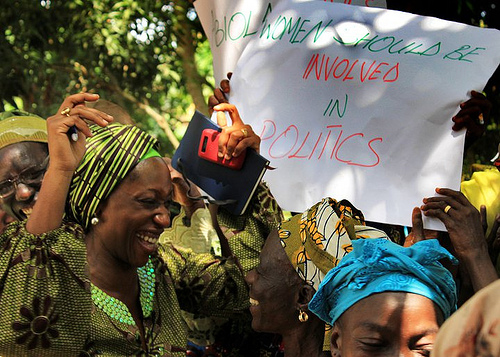
Why empowerment and power structures are at the very core of social entrepreneurship. Image from Africa Renewal. 

For the past 15 years, I have invested a great deal of time, energy and money in the field of social entrepreneurship. I did this because I believe we need to take very significant actions to address global poverty and socio-political inequality, primarily through the creation of livelihoods and personal wealth. This will only happen by financially and politically empowering the disenfranchised so that they may climb out of poverty.

Social entrepreneurship, if done properly, creates, fosters, and grows communities with new opportunities which were never within their reach before.

Over the years, as the enthusiasm for social entrepreneurship has grown, I have seen all sorts of individuals, teams, and organizations join our ranks to start to form an ecosystem. But I've also observed the term “social enterprise” used in all sorts of ways - some valid, and some completely disingenuous. 

Many of these things are well-intentioned and some even make a positive difference in the lives of people and their communities. These activities include corporate social responsibility, ethical and sustainable business, “conscious capitalism,” social innovation - all of these things signal the creation of a new economy; but these models are not actually social entrepreneurship. Engaging with your stakeholders does not, alone, make you a social entrepreneur.

Social entrepreneurship is not about "giving back,” be that in donating 1-100% of your profits to a good cause or slick “buy one, give one” marketing schemes. (And especially not ones with such opaque supply chains as TOMS shoes, where it is unclear who is making the shoes, under what working conditions and how much they are getting paid.)

Social enterprise empowers people so that they can amplify the great work they are doing already. It is not something done to people or for people. It should be a collaborative effort done with and chiefly by those people. 

Social entrepreneurship is not about elitist fellowships, conferences, summits, accelerators, coworking spaces, or contests. Social entrepreneurship is not about charity or even about philanthropy, and it's certainly not about wealth redistribution. Social entrepreneurship is about opportunity and power distribution. 

The economy is a human construct. It’s a formalized system for how and why we relate to each other and how and why we create value for our society. Any social enterprise venture must have members of the disenfranchised in positions of power inside the venture, be that as a founder, executive or board member.

Members of privileged groups can be part of the solution by sharing power with underserved communities as they contribute their skills, knowledge and labor to solve their own problems and create value for society. This should be a partnership. Privileged groups should not be saviors or benevolent agents - rather they should be collaborators in creating a healthy economy that benefits everyone.

You don't solve poverty with money. You solve poverty with agency. 

For the past three months, I've had quite a few conversations here in Philadelphia, which is chock full of social problems. I’ve had conversations about how to define social enterprise, what its goal is, and what exactly would change looks like, in the context of a citywide economic development strategy.

After much wheel-spinning, here is what I see as the central tenet of social enterprise: transformational change that, if done properly, creates new, previously out-of-reach opportunities for communities from the ground up.

"The ultimate measure of a man is not where he stands in moments of comfort and convenience, but where he stands at times of challenge and controversy. The true neighbor will risk his position, his prestige, and even his life for the welfare of others. In dangerous valleys and hazardous pathways, he will lift some bruised and beaten brother to a higher and more noble life." - Dr. Martin Luther King, Strength to Love.

This philosophy and practice is very much what my role model and hero Muhammad Yunus did in founding and developing Grameen Bank for 30 years.

During those 30 years, he was held accountable to the owners and board members, who were most importantly the bank’s customers: the disenfranchised women he set out to help. He laid the groundwork for this practice well before microfinance became sexy. He did this as a highly esteemed economics professor, with a comfortable life and high social standing in his community. Because of his position and the lack of belief in his vision, his ideas spawned vast criticism. The naysayers weren’t just the loan sharks, but also the do-gooders and the general population, as well as his friends, family, and colleagues.

The push back was due to the fact that his work was revolutionary. Grameen did not merely “make an impact,” but created a transformational force that empowered a generation of women beggars to become entrepreneurs with control over their destinies. The effects of his work have cascaded into the next generation, who are better off than their predecessors.

“...There has also been a shift from agricultural wage labour (considered to be socially inferior) to self-employment in petty trading. Such a shift in occupational patterns has an indirect positive effect on the employment and wages of other agricultural waged labourers.” - Breaking the vicious cycle of poverty through microcredit, from Grameen Bank's website

One of social entrepreneurship's main roles is to empower the disenfranchised to become independent of philanthropy, charity and aid. Social entrepreneurship must evolve to create models that strike at the root causes and structures of social inequality. It’s up to this and the coming generations of social entrepreneurs to improve on models like Grameen’s.

There are many great ventures already underway moving the field forward:

Most directly related to Grameen Bank is Inventure, a global organization combining information and technology to unlock financial access for all by providing financial literacy, accounting, and credit scoring through a text-messaging platform.

Sughar - Balochistan, Pakistan (in the local language, it means skilled and confident woman). This organization is creating participatory solutions to community problems. The initiative is aimed at ending the negative customs by promoting and magnifying the beautiful traditions and providing socio-economic empowerment to women.

CREA - in Mexico City and Zacatecas. CREA supports women entrepreneurs to believe in themselves and their work, to manage successful business, and in this way to improve their own income and standard of living. CREA promotes the comprehensive personal development of women as decision makers and successful businesswomen that are leaders in their homes and communities. 

Jacobs Center for Neighborhood Innovation, of San Diego, CA. “Resident Ownership of Neighborhood Change” is a program created to foster the creation of businesses, jobs, and community wealth. The Jacobs Center is also meant to expand the avenues and opportunities for resident participation in the planning, decision-making, implementation, and ownership of community change.

That is transformational power that social entrepreneurship was created to foster!

If you would like to become a social entrepreneur (or already have a venture underway), there is a great community around the world that can help you get started or move your idea forward. Here is a helpful tool kit full of resources and a map of accelerators and incubators that can help you launch and grow your social enterprise.

Rate this article

Your rating: None Average: 4.2 (49 votes)

Comments

"You don't solve poverty with money. You solve poverty with agency." I love it!
Thanks for your insightful article and the tool kit. I plan on using it and sharing it with my friends.

Great stuff here Montero - I think we will always need to hear something along these lines as we crusade for the greater good. Empowering community with the tools to improve their lives is something that I want to continually see happy in the health innovation market.

Thanks for the resources as well!

Great article! I'm a social entrepreneur based in Cape Town, South Africa. Just launched a new local communities web site, localme.co.za which I'm hoping will help people connect with others in their local neighborhoods.

Great piece Montero! You might also enjoy the definition of "radical" social entrepreneurship: http://www.radicalsocialentreps.org/radical-social-entrepreneur-definition/

"Radical social entrepreneurs (RSEs) share these goals, but take things to the next level. They create ideas and projects to help evolve law, governance, community, education, and culture. They focus on changing the systems that lead to poverty, crime, and other social problems"

I think the collaborative economy, p2p, open licenses, etc... fits quite well into this definition

Some solid reminders in here of where we are in the development of social enterprise - thanks for summing it up so nicely Martin. I resonate with your calls for transparency and inclusion in organizations wanting to claim the position of social enterprise. I hesitate to be too critical of models or organizations that may at first glance appear wanting until getting a better sense of trajectory: is there evidence of movement (that can be verified due to transparency) to higher and higher ground? If there is real movement, what looks like greenwashing today might become significant impact in the future if the early and small steps reach a tipping point. Meanwhile, there is much to celebrate in the sector and glad to see you remain impatient with the pace of change. May your persistence be rewarded!

From a 2003 strategy paper

"It is not enough to merely give people the things they need to survive. This will work for a short time, but is not a long-term solution. There is an old saying: give a man a fish and he can eat for one day. Teach him to fish and he can eat for a lifetime. Giving people enough to live today may be enough for today, but it is not enough for tomorrow. Helping and teaching people to make a living, sustain themselves and their families, is in fact the only long-term solution to the problem of poverty. Further, for the first phase of economic development or economic recovery of any location, it is also possible to create an ongoing source of the critical funding needed to get the job done. Capitalism and market economy comprise the best economic engine ever invented. Assisting poor communities in developing their own markets is now meeting growing acceptance as the best way to go to alleviate poverty. The profit motive, integral to capitalism and market economics, is the driving force for successful economies """""""around the world.

This is fantastic. Thank you for "You don't solve poverty with money. You solve poverty with agency." I may quote this in an upcoming piece of writing (not on a blog)--please drop me a line if you have a more formal piece I should cite.

(On another note, hi Jeff Mowatt! We are on the same groups on LinkedIn.)

Hi Elizabeth, It is this process of empowering communities bottom up that began our work:

"The term People-Centered Economic Development derives from the work of Carl R Rogers and his advocacy for a person-centered approach to therapy. Given access to the necessary resources, he believed, people could resolve their own problems flourish and grow.

People-Centered economics is therefore about inserting these ideas into business and economics."

http://economics4humanity.wordpress.com/2012/06/22/post-growth-people-ce...

You will find serveral formal project plans on our website link

Elizabeth,

Glad you like it. Sure, you are welcomed to quote this.

Cheers!

Martin

Martin @Montero
Partnerships and Special Projects Director
theloomphilly.com

Thanks Martin - Social entrepreneurs are not content just to give a fish or teach how to fish. They will not rest until they have revolutionized the fishing industry." Bill Drayton

Change the way we build/provide homes
Decent housing is one of the key factors in the fight against poverty and social exclusion. It is not just about putting a roof over someone’s head. Academic research proves that access to a clean and stable home implicates an improvement in security, health and education. With the motto “Train the unemployed to build for the homeless” Moladi combines construction with economic development. The company offers training locally for the unemployed thereby creating jobs and empowering the community as a whole - a catalytic role in the lives of many families in poverty
http://forbesindia.com/blog/the-good-company/to-build-or-not-to-build-th...

Martin,

You have come a long way, and your diligent efforts are obviously paying dividends. Good to hear from you and keep up the good work. Gal. 6:9.

Amen, Martin.

These are the exact principles that I founded Nisolo on over the past few years (www.nisoloshoes.com). It is amazing to see the results of empowerment vs. aid distribution. I completely agree that the social enterprise realm needs to take a serious look at what can and cannot be defined as social entrepreneurship. If more and more companies and organizations ignorantly throw that title around, the general public will only become more skeptical about the term. Thank you for drawing attention to this and having such boldness in your post. This is a great inspiration to me to day as I work on the ground here in Peru.

http://nisolo.wordpress.com/2012/04/10/how-why-nisolo-is-not-another-toms/

Patrick W.

If you don't know about Amy Costello's "Tiny Spark," you should check it out. She is a world-renown journalist now striving to double check that those who say they are doing "good," are actually doing things well.

http://www.tinyspark.org/podcasts/toms-shoes/

Martin these are great points with some wonderful illustration. Thank you so much for sharing. I would amplify your points by noting that there are a number of ways social entrepreneurs are getting more creative with impact.

For example, Very Nice Design Co. uses a model of doing 50% of their work pro-bono. They do this because non-profits spend $8 Billion in marketing and design each year. And they believe that by making it more affordable for social enterprises to promote their work, they free up more dollars to create more impact.

Perhaps, in some ways, people might argue that this is just a modification of the philanthropic model. Yet, by targeting a critical aspect that drives economic sustainability, they are certainly do more for impact than just the "rich helping the poor". I think their story, in their words (which you can read here http://news.bjibe.com/2012/11/30/social-entrepreneur-matt-manos-raises-b...) demonstrates that they are socially entrepreneurial. Thoughts?