I don't know how we're going to keep paying the rent, and we're going to have to make some more tough decisions in 2012. The crisis has reached a secondary level, and for everyone I know it's the "new normal" now. But I see inertia creeping in, and I wonder if we are conditioning ourselves to less effort, and using the extended economic downturn as an excuse.
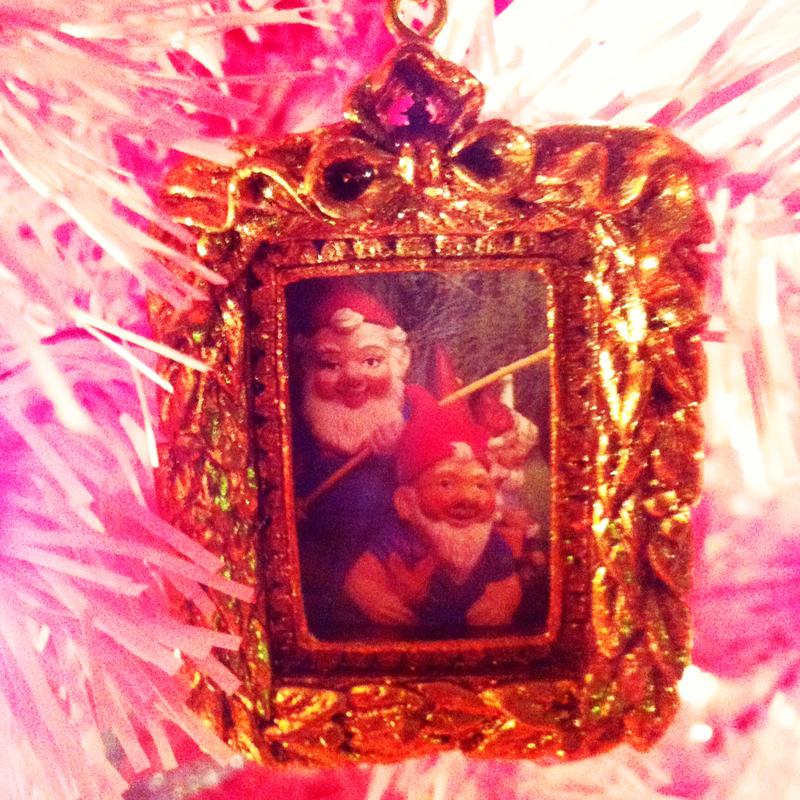
"Now Mom, I'm going to have you sit on the floor in front of the hearth. Sisters, can you sit on either side of your mom? Put your hand on her shoulder, there . . . that's it. Dad, can you hold Brother in your lap? Okay, hold that smile, perfect!" Five matching white shirts in a row, before an artificial fire.
That was a small moment, an attempt to mimic relaxation and family togetherness for the sake of a Christmas card. Now, five years hence, I'm fearful that we may be becoming too relaxed, this time in front of our wall heater on shabby carpet, no professional photos for the last several years, and wondering: is this recession making us soft?
The one unforgivable crime in my family culture when I was growing up was laziness. When I was an adolescent, struck with exhaustion from newly-active hormones and lengthening limbs and longing to sleep late on the weekends, I was routinely strongly encouraged to get out of bed at eight to go mow the lawn or otherwise be of service. My ancestors' work ethic gained near-mythological status in our family's oral history. Solid Midwesterners and Southern Protestants, of vague northern European background, stalwart and duty-bound. My grandparents were of that generation that could do no wrong, who suffered through the Great Depression as children and World War II as young adults, and handled both with noble aplomb.
My husband and I used to spend a lot of time preparing for the Christmas toy-buying season. It’s one of the opportunities of sanctioned shopping, and no one looks askance as you whip out your credit card time after time. No one wants to see the children get shortchanged, right? Writing long lists to Santa is a treasured childhood ritual. Missing any of the components—all the way down to the bulging stockings hanging from the mantle—is just downright unsporting. I don't know how we determined the gift-quantity-to-child ratio, but it was generous. We would get fat catalogs stuffed in our mailbox every day, and it was no wonder, as we were probably on every marketer’s mailing list as affluent, profligate spenders. We weren’t really living beyond our means, as we had a year’s worth of savings when we lost everything. And before the holiday season arrived, we made sure to go through the toys in the playroom with each child and fill big garbage bags with donations.
But this year marked our third Christmas season of living below the poverty line. Each child gets one carefully-chosen "big" present, and my husband and I put things on layaway in order to afford them. I know that it is easily morally defensible to live in this more austere fashion. This year, though, I've been having an inner struggle, trying to reconcile the choices I've made with the values I was raised with. I know for a fact that most of my (estranged) family would respect me more if I were taking a bus to an overnight fast-food job an hour away for example, rather than do what I am doing, writing and working here-and-there when something comes up, while my husband suffers underemployment at a punch-the-clock low-paying job. Honestly, I don't know what I'm doing or how and when it's going to change. The first couple years of the recession left us struck dumb, all of us holding the bag and wondering what would come next. Our family made some dramatic decisions that allowed us to cling to the edge of the survival cliff, but it's not cute anymore. We downgraded our lives, moved out of our tame and tidy suburban comfort, sold our only car, and learned to live without some of the more obvious luxuries. At the time, and for a while after, people respected our choices. Now, though, I see that inertia creeping in, and I wonder if we are conditioning ourselves to less effort, and using the extended economic downturn as an excuse.
Could I be doing more to provide for my children? Is it time to get back on the fast-moving train of ambition? I can't even remember how to do that, and I don't know if my bicycle will take me there.
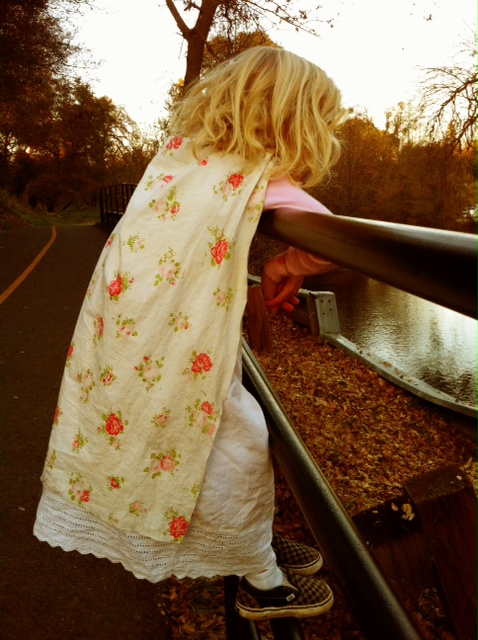
Today we rode our bikes in the winter cold, eleven miles round trip, to enjoy a special and rare meal out at a favorite restaurant. We don't make things too easy for ourselves, and the self-immolator in me likes that. I don't want to wander down the garden path unless there's some discreet auto-flagellation happening as well; it's how I was raised. Our resources are drawing thin, though, and it's happening everywhere. People are losing their extended unemployment, relatives and friends can't be supportive forever, and the bottom of the barrel we've been scraping is really and truly turning up empty.
I can't feel unhappy about my life. There is the joyous jangle of the sort of freedom that "fuck-it" buys you, and the color and clatter of our chaotic existence now gives me more pleasure than my corporate affluence ever did. It has to be an evolutionary imperative, doesn't it, that we let some of the stress recede when it's been suffered in perpetuity? My Scandinavian and Scottish ancestors populated Oklahoma Territory, and my Cherokee relatives endured the Trail of Tears and joined with them, relocated against their will to an inhospitable annexation. That land, that time, and the people that embraced these challenges mark each snarl of sinew and synapse of myself, and I struggle with my stasis now.
I don't know how we're going to keep paying the rent, and we're going to have to make some more tough decisions in 2012. The crisis has reached a secondary level, and for everyone I know it's the "new normal" now. For me, I just need to concentrate on the map inscribed at a cellular level and dig up the strength and capability to lift my family up and carry us through this.
Rate this article
Comments
Dear Corbyn,
So, you are learning to relax into this life? And that is wrong why? As long as the rent gets paid, that is the one thing that would truly scare me. I am not sure what exactly you mean by getting ambitious again, but it looks like the jobs truly are not there. Working as much as possible in the direct-use economy may well be the smartest thing one can do.
If you have never encountered Dmitri Orlov, take a look.
http://cluborlov.com
Here is a crazy idea that just popped into my mind. I don't know about your area. But here in rural interior B.C. there is a large population of sixty/seventy somethings who moved "back to the land" around 40 years ago, when we were expecting imminent collapse. It took a bit longer, but it looks like we were not quite so crazy after all. Most of our children have moved away to the cities. These homesteads need young people.
I wonder if there are connections to be made here.....just brainstorming!
Wishing you all the best..
Hello Corbyn,
I just found your blog, and really appreciate the story you are sharing and the writing itself. This particular post absolutely echoes a question I've been asking myself this last month or two. My family has gone through a similar downsizing from high-tech jobs and lifestyles, starting with a sudden life-threatening medical adventure (husband's appendectomy and years of complications) and sliding through the economic downturn. As a matter of necessity, and then increasing curiosity, we moved toward simple living. We have a much more satisfying life now in many ways and continue to examine how much more we need/want to eliminate. But I do wonder whether we are getting a little too comfortable with living smaller and staying focused on coping with the day to day. We are scraping by (not quite) working for ourselves; should we be trading our time at home, where we can employ our expanding DIY skills, for more energetic job-seeking? Are we willing to leave a supportive, semi-rural community where we're not judged by how much money we have, for somewhere with better-paying work, assuming we could still get it? How do we prepare ourselves and our teenage son for what the world will be like in the coming few years? It's a relief to hear someone else pondering similar questions.
@Thea:
You asked: "Are we willing to leave a supportive, semi-rural community where we're not judged by how much money we have, for somewhere with better-paying work, assuming we could still get it?"
You are far ahead of the poor saps who are still totally depending on the status quo continuing. Nobody knows what sort of world to prepare for right now. Learning a mix of practical "direct use skills" like cooking and gardening and acquiring more academic knowledge. Learning Mandarin might be a smart move. Canada's national talk program, "Cross Country Checkup" had a forum on the economy a while back. One of the people calling in was a woman who had left a home she owned on a Gulf Island, complete with homestead-like setup, in order to give her teenage daughters the city advantage. She burnt through her savings inside a year and never found a job. Think hard!
You mention learning skills and acquiring more knowledge, and that's exactly right -- I believe we will all have to continually change and expand our idea of what can be done, as this time of transition proceeds. No settling into an employment groove and just showing up and getting your paycheck. But there's still the sense of swimming up a very big stream against the cultural current. That's probably what generates the middle of the night angst attacks, because there are no clear signposts to say you're going the right direction (although of course, recognizing that individually and collectively your family is happy is a good indication.) Thanks for your comments -- I'm quite unlikely to take up Mandarin, but my small adopted niece is learning it so perhaps she'll translate for me eventually!
Make a $10 tax deductible donation to Shareable before the new year and recieve a free Crowdfunding Nation e-book.
Related Articles
- The Ultimate Guide to Traveling Without Money
- Help Us Improve Shareable (Takes 2 Minutes)
- Rural Coops Show the Way to Urban Job Growth
- Is Living in Your Car a Viable Way to Save Money?
- "Shift Change": Doc on People-Centered Business
- Share this Book! The Free Version of Share or Die
- Getting Hip to Brooklyn Sharing Culture
- Shareable's Best Alternative Vacation Ideas
- Kicking off a Year of Open Source Everything
- How to Start a Repair Café
Community Blog Posts
-
By Drew Little
-
By Tim West
-
By Liz Elam
Recent comments
-
19 hours 59 min ago
-
21 hours 45 min ago
-
23 hours 57 min ago
-
1 day 59 min ago
-
1 day 1 hour ago


I like your post, and I share the sentiments, even though we haven't given up as much as you have in the past three years.
It reminds me of how the Paiute Indians of Nevada were perceived by the early settlers, as lazy, lay around good for nothings, who did nothing to better themselves or their tribes. However, their observations didn't take into account the fact that the land was so poor in food resources that the natives simply couldn't expend that much energy that they couldn't replace without extreme difficulty. There just wasn't enough food, period, to allow for the kind of work that the settlers could, mainly, by bringing in food from outside of the ecosystem.
In this new economy, there are still opportunities to find resources, but it does take a certain kind of mind and awareness, but waiting for so long can definitely impact that 'edge' of looking....
On the other hand, sometimes you have to make a shift, in a more radical way, to keep your family fed and secure. About five years ago, I started learning to timber frame, mostly on cabins for our summer camp, and a bridge and a few other small projects, and then I started to get some jobs that began to trickle in for other people. In 2011 I had four large jobs that really made the difference in keeping us going financially as an organization, and a family.
At the time I started learning framing, though, my board of directors thought it was a dumb idea, and that we should focus on our school and camp programs, but as it turns out, it was the perfect thing to diversify for us as many other programs have slowed in recent years.
That being said, my family is from North Highlands, back in the day when the Air Force base was there, and my grandfather and I would travel to Roseville often for feed and hay for the horses... I miss me some Central Valley fog, rice fields, and warm winter days...
Good luck!