Social Media Isn't Changing the World, It's Creating a New One
10.12.10, 3:51pm Comments (16)

Blogs have been a twitter about Malcolm Gladwell’s New Yorker article last week slamming those who believe social media can revolutionize activism. The article compares the high risk activism of the civil rights movement with Twitter’s role in the Iranian elections concluding that, “the revolution will not be tweeted.”

First of all, taking aim at those who are love drunk for social media is like shooting fish in a barrel. Secondly, it’s no revelation that a tweet is less effective than putting your life on the line for a cause.

Moreover, Gladwell gets the role of the online activism wrong. As someone who worked with professional online activists on a daily basis for two years while at Care2.com, I can tell you that none of my clients believed online activism had much value by itself. It was always part of a larger strategy and, as Mashable pointed out, serves a very specific role in activism – it offers citizens a no risk first step on the path to higher risk engagement. But this is no reinvention as Mashable argues. It’s mostly optimization.

From my perspective as publisher of Shareable, Gladwell's article and the resulting hubbub misses the larger points:

1.) activism by itself can’t achieve its stated aims no matter what medium is used. A new social order requires a new economy.

2.) social media is primarily creative – its true power is not as a tool for resistance but as a coordinating medium for an emerging peer-economy which promises to obsolete state capitalism.

The reason I co-founded Shareable is that having been a lobbyist and a capitalist, and now a nonprofit activist, I’ve come to believe that activism by itself is no match for state capitalism. I remember vividly the time ten years ago when I naively asked a peer at the FCC, who I interfaced with as a representative of a large telecom trade association, where the FCC got their market research. They said, “from you.” I was shocked. The FCC didn’t do their own research. They relied mainly on industry for that. Of course the public could weigh in too, but the presence of public interest advocacy seemed minimal. We, on the other hand, never missed a beat. The association membership was unified and funded our lobbying efforts well.

This story points to a systemic issue - activists face a classic collective action problem that has no resolution: the nonprofit sector is composed of many entities with many agendas; the corporate sector is composed of a smaller number of vastly more powerful entities with only one agenda – profit. This means that it’s significantly easier for corporations to act collectively and achieve their goals than it is for nonprofits. This is partly why corporations have become so powerful.

Bottom line, the nonprofit sector is structurally fucked and social media doesn’t change this one byte, because after all it’s available to both sides in the game. The failure of the COP15 climate negotiations is a good example of activism’s limits. And then there’s this brave letter from Bill McKibben admitting that the environmental movement is failing to get action on climate change. This is despite having public opinion on its side and a legion of activist across the globe.

I could go on, but it’s obvious to even the casual observer that needed change across a range of issues - from environment to healthcare to economy - is not happening. Activism is having little impact. And at best social media is a wash in all this. At worst is the more likely case that corporations use social media more effectively than civil society.  We need a new game entirely.

Does this mean that we should give up on activism? No. It’s crucial, but not for the reasons stated by activists. Activism can’t get the change needed by itself, but it slows the destruction caused by state capitalism, educates citizens about the issues, brings citizens into dialog about social change, and builds community among those who are concerned. As a board member of two nonprofits, Forest Ethics and Independent Arts & Media, I remain a committed activist. And I wouldn't have co-founded Shareable without having become an activist first.

However, I believe a new, more powerful front of social change has opened up. Consequently, I now focus most of my energy on helping to catalyze the shift to a peer economy through Shareable. This shift doesn’t replace activism, it complements it. And it's the new game we need. As commons expert Silke Helfrich said in an interview recently about what’s needed to address poverty and climate change simultaneously, “the essential ideals of state capitalism - top-down government enforcement and the so called "invisible hand" of the market - have to be marginalized by co-governance principles and self-organised co-production of the commons by people in localities across the world.”

Coincidently, the day after Gladwell published his article slamming social media, Shareable and partner Latitude Research released The New Sharing Economy, a report exploring the role social media is playing in this shift. The research was inspired by noticeable surge in Internet startups that help people share offline stuff. Simultaneously, two new books, What’s Mine is Yours: The Rise of Collaborative Consumption and The Mesh, have come out arguing that this startup activity is part of a fundamental shift from an ownership to a sharing economy. They document the trend and its reach into an increasing number categories of shared use including office spacelodgingtextbookskids clothesparking spacesgarden plotsplanescamera lenseshandbagsboatshousehold items, and more.

This is a promising trend from a social change perspective because like commons, these services offer many social benefits: lower costs, stronger communities, resource conservation, broader access to resources, and higher quality products made for sharing. Sharing addresses many problems at once - an appropriate solution for an era of interconnected crises.

Importantly, economics and demographics are behind the trend - it's more than technology driven. Sharing saves money in an era of high unemployment, high household debt, and declining wages. Millennials, the first web native generation, bring the practices of the web - where sharing is core - into real life. In addition, Millennials value relationships, experiences, and social good over bling. Even stogy car companies are adjusting their plans to accommodate a generation that wants to access personal transportation on demand as if it was a service in the cloud. 

Social media is enabling the trend along with mobile phones. As Kim Gaskins of Latitude says about the role of social media in the shift:

The confluence of media and technology was first groundbreaking in it's ability to connect people to information.  Then it was really about connection people to other people with the advent of web 2.0. Now the natural extension of all this is connecting people to stuff - to the physical things of everyday life.  We're at a point where online, shared interest communities and advancements in mobile, real-time and location aware technologies have created a 'perfect storm' for sharing in the physical world.

And as our research suggests, social media is paving the way for growth of sharing:

  • 78% of participants felt their online interactions with people have made them more open to the idea of sharing with strangers, suggesting that the social media revolution has broken down trust barriers.
  • 85% of all participants believe that Web and mobile technologies will play a critical role in building large-scale sharing communities in the future.
  • 75% of respondents predicted their sharing of physical objects and spaces will increase in the next 5 years.

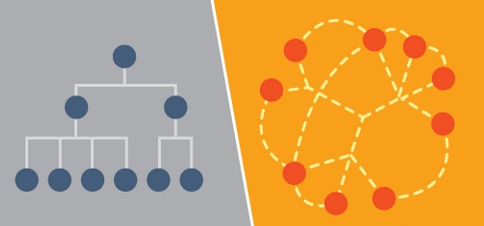
This spurt of sharing entrepreneurship, however, is only one aspect of the shift to a Shareable society. As Shareable shows on a daily basis, peer-driven, open source methods of production and consumption are reaching into seemingly every corner of global society. The trend appears unstoppable because this new economic mode works better both online and off in many important areas of life. Plus, the spirit of this movement - whether embodied by the open source proper, Transition Towns, or worker coops - is to create new, peer-based economic relations that do not rely on the market and state. This makes it difficult for state capitalism to disrupt it. It truly is a new game. The dinosaurs of state capitalism have met the mammals of open source - an evolutionary shift is on. As David Bollier says in his book Viral Spiral:

A world organized around centralized control, strict intellectual property rights, and hierarchies of credentialed experts is under siege. A radically different order of society based on open access, decentralized creativity, collaborative intelligence, and cheap and easy sharing is ascendant.

Social media is the perfect handmaiden for this change. It’s not only an enabling technology and cultural training ground, but gives citizens the perfect medium for evangelizing a new mode of cultural and economic production. Sharing is indeed viral.

So, Messr. Gladwell, I agree with you. Social media isn’t changing the world, but it is helping to create a new one that will obsolete the old. Viva la evolucion.

Teaser image courtesy of opensource.com.
Rate this article

Your rating: None Average: 5 (3 votes)

Comments

Very interersting article. I just want to share a presentation about Social Media which I found yesterday: http://www.slideshare.net/mzkagan/what-the-fk-is-social-media-now-4747637

It seems to me that Gladwell makes a few good points (no, Twitter will not overthrow the Ahmadinejad regime) but picked the wrong fight. Social media has much positive potential with regard to sharing and organizing, as Neal details here--the problem isn't the tools but their breathless cheerleaders, who trade in Utopian rhetoric for their own benefit, not society's.

I think Gladwell's example says more about how many Iranians he knows than anything else. My Iranian friends felt that tweeting/fbing their ideas was quite dangerous, and some of them didn't go home because they were afraid of being arrested. There were also, at various points, concerns that anonymous Iranian tweeters stopped tweeting because they had been "taken away" for doing what they were doing. Just because it's online doesn't mean it's not dangerous. Just ask Bradley Manning!

Really the issue is that Tweets and protest politics are of little value compared to the transforming value of creating a complex multi-layered democracy. What that looks like: Joining committees, creating committees, supporting institutions, getting over the "I'll complain to the Man" protest politics (low effectiveness), supporting campaigns, voting, creating citizen groups, taking part in interest groups, etc. Much of that work is live.

I agree with you Carol. We hope to paint a vivid picture of what that looks like in our Civicsystem channel. We're actually looking for an editor for it. Anyone you could recommend?

I'm a big fan of your writing and work, Neal.

Here's my response to your response......Most of the sharing you talk about here involves goods (homes, cars, office space, clothes) that are made in a non-sharing economy. It's less earth-shattering to "consume" sharing, less likely to offer a real alternative to the free market.

Transition towns and worker coops are different, of course, but it seems a big leap from carsharing to that, one that involves a lot of face time, risk, and leadership (as opposed to the virtual-safe-leaderless world of online sharing.)

I love your bold vision of "peer based economic relationships that don't rely on the market or the state." But there is a lot of distance between that and consumer-based sharing. Have you thought about that leap, how to encourage it, etc.?

Andrew,

Thanks for the encouraging words.

I agree with you, it is a big leap between car sharing and Transition Towns. Another way think about it is not as a chasm between the two, but rather that things like carsharing are an easy entry point into a peer economy that can lead to other more complex forms of sharing.

There's actually a factual basis for this. The study mentioned in my post above found that car sharers share in significantly more categories than non-carsharers (11 vs. 8).

So it may be that carsharing is a kind of gateway drug to sharing. Aside from the study, we've found anecdotally through our work reporting on sharing that more complex sharing efforts seem to start with very modest first efforts. For instance, The Ainsworth Collective in Portland started off as a monthly neighborhood potluck but evolved into a neighborhood micro-economy. You can read about that here:

http://shareable.net/blog/wont-you-be-my-neighbor

And then there's the case of the tool library in Santa Rosa, which inspired a number of other sharing efforts:

http://shareable.net/blog/sharing-is-contagious

It seems sharing is contagious, but folks benefit from a sampling of sharing first before they start down the path to harder sharing. Makes perfect sense. That's a little bit of my experience so far.

Andrew, really spot on question. I'm curious about your ideas. What do you think can be done to encourage folks to make the leap / start down the path?

Neal

Relevant news piece today:

Green Fatigue Hits Campaign to Reduce Carbon Footprint:
http://www.independent.co.uk/environment/climate-change/green-fatigue-hi...

Apparently Britons are bored with climate change and wasting more than ever. The recession and a green backlash is taking its toll.

We need a positive vision that people are eager to pursue over the long term. Activism won't work alone long term.

Hey Neal,

I don't doubt that sharing can lead to sharing. But that is so different from producing. Sharing strategies are a great way to enrich (materially and spiritually) a life lived in the market economy. But does it really challenge that economy? The people I know who use CarShare here in Philly didn't have cars before. They are actually driving MORE, using more petroleum, through a sharing platform. And those cars are (inevitably) brand new and quickly sold into the secondary market once they start to look less than perfect.

That's an extreme example, to be sure, and P2P sharing platforms are for more resilient and resourceful than CarShare Inc. But there's something about getting More, getting a Better Deal, in sharing that can feel like Shopping for the Left (and The Broke).

Sharing platforms that engage Production, not Consumption, feel more radical to me, going to the root of the issue. But they also tend to get quickly tangled in the "coop" webs of all-consensus-no-incentive.

Andrew,

I agree with a lot of what your saying. For instance, the production side is perhaps foundational and more important than sharing on the consumption end. Will have to think about how these two aspects of a Shareable economy work together.

Here's data from City Carshare that shows a different side of carsharing:
http://www.citycarshare.org/green.do

Another big benefit is carsharing makes denser urban development possible, which has important social and environmental benefits. Housing cars takes a lot of room!

But even better than carsharing would be just walking or biking.

And even better than all of this is to simply decide what kind of economy we want and just go build that. It's difficult to prove conclusively this or that is happening, but we can work to invent the economy we want.

Neal

Hi Neal,

Though it's not so much social media, one great "activist" tool I appreciate is the whole text-a-donation model. When people can make a donation to Haiti or The Trevor Project via text, it really must generate far more income than if they couldn't. I know how turned off I get when I have to set up an account and input my credit card number just to give $10 or $20 to something.

It's the little things...

Me again Neal. First of all, I'm ecstatic that carsharing exists. I think there is a younger generation of urban dwellers who may never need to own a car. So a big Hell Yeah to start off.

AND.....I am hungry for some real data on carsharing. Might you know where to find it? I imagine: total CO2 footprint of the manufacture, fueling, upkeep of the cars (and of the carshare business) vs. verifiable reduction in CO2 output in members' use patterns. I'll bet that it is a net reduction, but not nearly what people claim. Any members who didn't have cars before joining are a carbon increase, of course, and families getting rid of one of their two cars (another thing I've seen with carshare) is complex: you'd need to know the change in miles driven, mpg's of the various vehicles. So I know it's a knotty problem.....

The City CarShare site makes the same general claims about impact I have read a lot. "for every vehicle we put on the road, lots more come off. Some say it's 7, some say it's 20; all we know is it's making a real difference." It would be easy to find out this stat: find out how many cars your members owned before joining and now.

All this leads me to this other big question I am mulling, crystallized by your excellent phrase about deciding what kind of economy we want and building it.

Economies (the market kind, the cooperative kind, sharing-based, etc.) are so complex. And they fail specific sense. (If I was from another planet, I would never guess that a competition and profit-based economy would produce and distribute so much stuff.) I worry sometimes that we people on the left can be overly enamored of the PRINCIPLES behind an economic model. We let the results and specifics sort of float out there because it feels like the Kind of Economy We Would Like.

Sorry for the endless posting, by the way. And I'll stop being mean to carshare.

Andrew, appreciate your comments and questions. That's what Shareable is for - to challenge and explore ideas, and hopefully inspire folks to try new stuff out too.

On carsharing, yeah, that page I shared was not so great. I found this one with academic studies on carsharing:

http://www.carsharing.net/library/index.html

The study of the impact of carsharing on household car holding does show most people joined to gain increased access to a car, but that members overall did shed a substantial number of cars (~6,000 households shed ~1,400 cars). This suggests increased access to the resource (for mostly young, low income workers) and reduced environmental impact.

Looks like a solid study:
http://www.carsharing.net/library/Martin-Shaheen-Lidicker-TRR-10-3437.pdf

Here here!

To steal a quote from Buckminster Fuller:

"You never change things by fighting the existing reality. To change something, build a new model that makes the existing model obsolete."

hello,

interesting tangent on the original topic regarding car sharing on what was a great article in general and is definetly giving me abit of direction, as its mirroring what i ve been thinking for a while.

As for the cars and economy in general, i would have to lean towards the idea of not making the old economy fit this new system and worry too much about the details of car sharing but how this gives the slate a clean ready for something completly different.

I lived in the states for high school and understand the need for a car, especially with the way the place, the suburbs especially (which will probably become obsolete), is laid out and general size of the country. I also remember the addictive sense of freedom it gave me, my friends and all americans who love to get out on the open road.

I now live in barcelona and can say that out of about 30 friends, 1 has a car. The setup is very different, of course, but this was what i and alot of other people in europe want, smaller, interconnected and more social community.
We have Bicing bikes outside our flats, basically free, to run over to friends places or the beach; relatively cheap mass transit and you can always call up someone with a van if you need to move house.

I know transport is only one aspect of the future sharing boom on the horizon but if we approach things in the right way and 'make the economy the way we want' things could get interesting.

great stuff
cheers

bucky

its not stealing, its sharing.